BREAKING: SaskPower buys land on Rafferty Reservoir for possible nuclear reactors #saskatchewan #nuclear #SMR
Also:

BREAKING: SaskPower buys land on Rafferty Reservoir for possible nuclear reactors #saskatchewan #nuclear #SMR
Also:
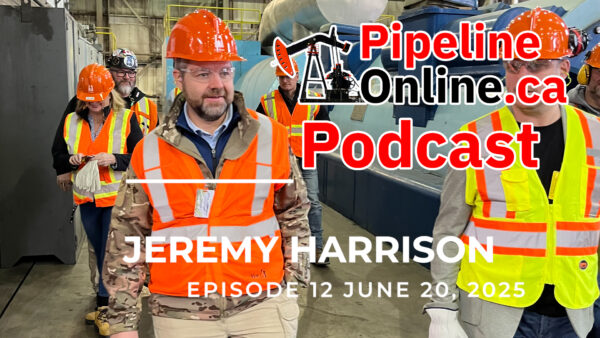
Saskatchewan is rebuildings its coal fleet. Here’s a chance to hear from Crown Investments Corp and SaskPower Minister Jeremy Harrison explain how this came about. It’s the biggest energy decision in 10 years. If you work in the coal industry in take time this weekend to watch/listen.
Remember when Justin Trudeau told the German Chancellor there was “no business case” for #LNG, and instead took him to Newfoundland where they would use wind power generation to create hydrogen? It turns out there may be no business case for hydrogen.
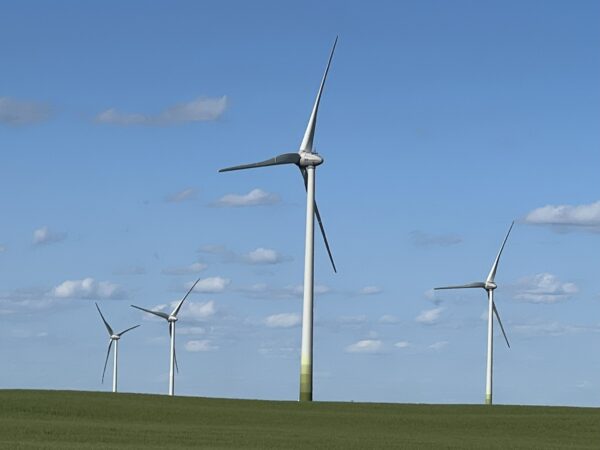
How a strong wind day led to coal exceeding natural gas power generation on June 8. This story ties in wind, coal, enhanced oil recovery, nuclear and natural gas and their relationships to each other.

Carney’s mandate letter to ministers is dramatically different than Trudeau’s, with climate change an afterthought. Trudeau mentioned climate 27 times in his letter to Steven Guilbeault, 20 times to Jonathan Wilkinson. Carney? Once, and almost in passing.

Another major nuclear announcement, this time in Tennessee, which will have impact on SaskPower’s nuclear ambitions.
This week seems to be dominated by power generation pieces. The announcement in Ontario on Thursday has enormous implications for Saskatchewan, as we’re finally getting a price tag on how much four GE Hitachi BWRX-300 reactors cost. The cost is $20.9 billion, equal to the ENTIRE Saskatchewan 2025 budget. And we’re still very early on in the process, so there’s plenty of time for cost overruns. And we would need four, actually five, to replace our existing coal fleet of 1400 megawatts. The question before Saskatchewan will soon be can we afford nuclear? And if not, do we run coal – even perhaps expand it as our power needs grow?
Ontario greenlights four SMRs identical to the model SaskPower has chosen.
Here’s the verbatim Ontario press release:
Ontario Leads the G7 by Building First Small Modular Reactor
Other news about Saskatchewan oil producers from Canadian Press:
Cenovus Energy reports $859M Q1 profit, raises quarterly dividend
Canadian Natural Resources reports Q1 profit up, record quarterly average production
Pembina Pipeline reports higher profits, revenues for first quarter
Weekend Watch: Are we on the brink of a nuclear revival?
This is a really good video showing many sides of the nuclear debate. Wind, solar and batteries are also discussed.

BIG NEWS: Westinghouse in SK, Part 3: Westinghouse signs MOUs with six Saskatchewan companies. When they say modular, they mean modular.
Despite Thursday’s partial tariff reprieve, Saskatchewan still cutting off US alcohol sales and procurement. This story is moving so fast, I had to update it twice before publishing. It might be out of date by Friday morning.
South Bow says tariffs could create challenges in its marketing segment (this is the spin-off company from TC Energy that operates Keystone Pipeline)
ROK Resources releases 2025 budget guidance, CEO discuss possible tariff impacts

Op-Ed: Aleana Young: Prairie Powerbroker: Energy Sovereignty and Economic Security for Saskatchewan.
Note: count how many times coal is mentioned.
Brian Zinchuk: How much might building SMRs cost Saskatchewan Hint: it’s not cheap.
This is a major piece talking about the costs that could be incurred building small modular reactors. Those costs could be unobtainable, which is why coal is back on the table in a big way.
The numbers come from the Tennessee Valley Authority, who already operate three nuclear plants and is the largest utility in the US. They plan on building the same model of reactor.
Also:
Moe proclaims pipeline projects “pre-approved,” Smith joins in.
I’m not sure how a provincial government can pre-approve something it has no regulatory power over.

Scott Moe 2024 in Review: Nuclear, Coal, Wind and Solar Power Generation
Also:
Enbridge’s Weyburn wind project open house, Part 5: Health, setbacks, provincial dollars
(conclusion of series)

In Pipeline Online’s continuing mission to ensure we all know exactly what the federal government is telling us on climate change initiatives, this is the verbatim press release from the Government of Canada issued at 18:10 hrs on Dec. 5. Notably, it was not sent out via provincial media releases nor SaskPower’s media releases. And apparently according to the feds, Jansen is a company, not the place the largest mining company in the world, BHP, is building the world’s largest potash mind. Check that out in the opening paragraph.
(You’d think the natural resources minister, and ministry, might be aware of the largest potash mine in the world being built in their country)
The announcement was made by Minister of Energy and Natural Resources Jonathan Wilkinson. He and Minister of Environment and Climate Change Steven Guilbeault are the federal Liberal government’s lead ministers on their numerous and various climate change initiatives. For good measure, we’ve interspersed a healthy dosage of oil and gas ads, that industry that this government’s Bill C-59 is trying to muzzle.
Highlights include money for a number of solar projects, advancing SMR development, the intertie to the United States, grid-scale batteries, and a “forecast that there will be over 130,000 clean energy jobs added in Saskatchewan between 2025 and 2050.”
Oh, and I am willing to bet a Christmas cheesecake the $265 million number was set so they could say it was more than Harper gave carbon capture in 2008 ($240 million). Never mind 9 years of inflation meaning my kid cries after buying groceries.
And on the topic of Guilbeault, Pipeline Online columnist Jim Warren, knocks another one out of the park talking about his involvement with the green slush fund.
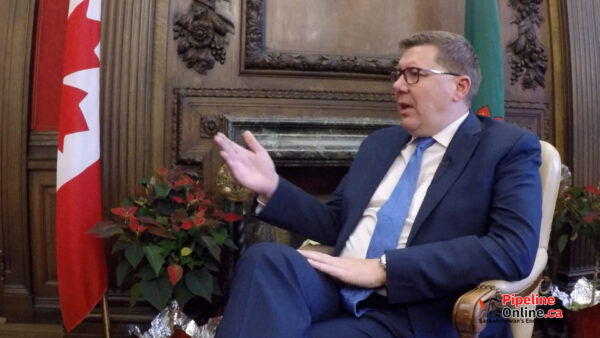
What a Sask Party win means for energy – seeking to hit 600,000 bpd, and eventually 1 million; nuclear power development, critical minerals.
Does this mean drill, baby, drill? For oil, lithium, and helium – to reach these goals, absolutely.
Also:
For the past decade, Quebec’s political parties have been arguing over who hates oil and Western conservatives the most along with which party can claim bragging rights for being the best at extorting benefits from the rest of Canada. Jim Warren hits it out of the park, again.
No big war, prices drop:
Oil prices fall as reality of weak global demand overtakes risk of wider war in Middle East
Once you cut gas taxes, you’ll never be able to bring them back. Dumb idea if we want to keep roads.
Ontario government moves to extend 5.7 cent gas tax cut to June 2025
Election 2024: All-of-the-above energy strategy, no changes to royalties: New Democratic Party
This is the third in a series of in-depth interviews with the parties vying for the Saskatchewan election. In it, NDP Energy Critic Aleana Young speaks about the NDP’s all-of-the-above energy strategy.
The greatest threat to nuclear development is not technological or even financial – it’s change in government. This was evident with the Site C Dam in BC, where a new NDP government pumped the brakes, but then ultimately went ahead with it. The NDP in Saskatchewan continue to support nuclear power development, but “we have to get it right.”
As I’ve done with the other parties, I reproduced everything I could find in the party platform related to energy. Well, the terms “oil” “natural gas” “potash” “critical minerals” “SMR” “nuclear” or “electricity” are not referenced within the document. But “healthcare” comes up 35 times.
Friday will be the Buffalo Party. So far, I have not heard from the Greens, PCs or Progressives. Wonder why? Is anyone else writing 3200 word stories on their energy policies?
On a side note, I attended a three hour long Estevan city council/mayor town hall this evening. It took 2 hours and 25 minutes before anyone made any serious comments about coal. That was right before I got my chance to ask about dealing with the impending eventual shut down of coal-fired power generation, but also preparing the city for nuclear power. Amazingly, about half of the 13 people on stage really had no substantive answer on that front, and several had no clue or hadn’t thought of it. You would think that would be the most important issue facing this city – much more important than sidewalks or boulevard flowers (which got more discussion up until that point than coal or nuclear). Especially since the nuclear built out will be the most costly infrastructure project in Saskatchewan history to date. (If I attend a forum like this, you can be damned sure I’m going to ask the toughest questions.)
Pipeline Online is attempting to do in-depth interview on energy policy with each of the parties involved in the Saskatchewan 2024 general election. First up: Saskatchewan United Party:
Election 2024: Grow oil production to 500,000 bpd, cut PST by half: Saskatchewan United Party
B.C. Conservative leader outlines views on energy, education in Dr, Jordan Peterson podcast appearance. He’s big on nuclear, which is radical thinking on the Left Coast. There’s a lot “radical” about him, from that perspective. Some might say “normal.”
How say you?
Pipeline Online columnist Joseph Fournier takes a different approach to nuclear development. He thinks we should get serious about fast breeder reactors.
Also:
Quick Dick McDick works hard, plays hard.

This video has little to do with energy and everything to do with how this country’s military has gone to hell in a handbasket. Dr. Jordan Peterson speaks with retired a retired three-star admiral and former head of the Royal Canadian Navy, a three-star army general and a retired air force major. They tear apart DEI and the woke reality in the military today.
If you care at all about the Canadian Armed Forces, or ever served, you should watch or listen to this.
Also, on the nuclear front:
‘Ontario’s moment:’ Minister says Canada building blueprint for nuclear energy future
And it turns out pipelines make money. Who’da thunk it?
Enbridge makes progress on utility purchases; raises earnings forecast

It’s not often an oil company CEO sells his company to run for provincial politics, becoming the leader of an upstart party in the process. But that’s exactly what Jon Hromek has done. And as someone coming from industry, his thoughts on energy transition, CO2 and coal differ from a lot of the other politicians in Saskatchewan, or for that matter, Canada.

For a long time, Premier Scott Moe has been saying it’s impossible to comply with federal regulations regarding getting rid of our fossil-fueled power generation, in the timeline the federal Liberal government wants.
It’s coming to a head.
This is the first action of this type thus far under the Saskatchewan First Act. This is what it was meant for.
If implemented in their current form, the Clean Electricity Regulations mean to all but eliminate the burning of fossil fuels for power generation in 10 years, six months and three days from now. Saskatchewan relies on natural gas and coal to produce the vast majority of its power, up to 88 per cent on some days. And if implemented, these regulations will fundamentally alter Canada and its economy, and affect all of its people in one form or another. It’s one of the most important policy pieces in generations, seeking to remake Canada.
Saskatchewan won’t follow Clean Electricity Regulation, citing Economic Assessment Tribunal report.
Executive summary of the report
The government released all the submissions to the tribunal. I will be reprinting many of them over the coming days, maybe weeks. There’s a lot. And there’s a lot to be said.