Author: Brian Zinchuk

Canadian company loading supertankers in Texas, with American oil

We never did build an oil export port at Kitimat. But Calgary-based Gibson Energy recently bought a massive, nearly brand-new oil export facility on the Texas Gulf Coast. And this one is capable of loading supertankers. Too bad there wasn’t one on the BC coast they could have bought.

Also, Brian Zinchuk talks to John Gormley Live about the carbon tax, helium, wind, solar and more.

Unreliable power a leading factor in South Africa’s demise

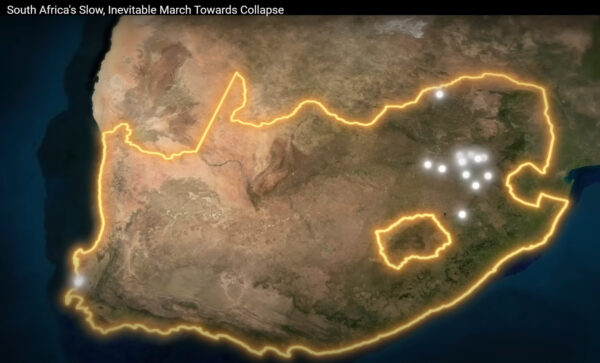
If you haven’t been paying attention, South Africa is falling apart. The reasons are many and various. But a principal factor is an increasingly unreliable power grid leading to up to a third of the grid being in the dark at any one time.

This is why Pipeline Online has been covering the reliability of the Canadian electrical grid with such intensity. Politicians talk about “reliability, sustainability and affordability of the electrical grid.” As these videos outline in great detail, when reliability collapses, nothing else matters. South Africa has at times one third of its grid in rolling blackout. Everything from food preservation to industrial factories to medical operations ends up in peril.

The minute any grid operator, power generator, or government starts talking about “load shedding,” things are going to hell in a handbasket in a hurry.

And as a reminder, the Alberta grid had eight “grid alerts” in the last year, each time when wind and or solar power generation failed. Alberta is a jurisdiction that has more coal, oil, and gas than God, because God gave all of his to Alberta. The only way this could happen is sheer and utter incompetence. You might consider that getting rid of reliable and cheap coal-fired power generation in favour of more and more wind and solar power might be indicative of this. And in the last few days, Alberta brought on another 297 megawatt wind farm, bringing their total wind generation to 4,150 megawatts. Two years ago, it was closer to 2700 megawatts.

Here’s a couple recent videos on YouTube discussing the ever-worsening plight of South Africa.

Trudeau just blinked on his premier climate change initiative, the carbon tax

Late in the afternoon of Oct. 26, the staunch federal Liberal policy of climate change priorities conquers all just cracked. With Atlantic Canada, once a solid Liberal base, up in arms over the federal carbon tax on fuel oil used for home heating, Prime Minister Justin Trudeau blinked.

Along these lines, Alberta Premier Danielle Smith thinks a renewable-powered electrical grid by 2035 is “fantasy thinking.”

Saskatchewan will use the Sask First Act to fight the feds on climate change initiatives

It was a full year ago when the Saskatchewan First Act was introduced and then brought into law. But now the provincial government is going to use it to fight the federal government’s climate change initiatives on Clean Electricity Regulations, Clean Fuel Standard, and an incoming emissions cap for oil and gas.

And here’s why:

Another day of near-flatline wind power production in Alberta on Wednesday. 13 of 38 wind farms produce 1 megawatt, or less (as in zero) for 24 hours. Several of those had capacities in the 100 to 200 megawatt range. And all the got was one, for a few minutes at a time.

And despite renewables clearly failing miserably, as noted above, Canada needs to move faster on renewable energy, Jonathan Wilkinson says.

There were some other energy issues raised in Wednesday’s Throne Speech.


Can solar flatline for a whole day? Yep.

Can solar power essentially flatline for a whole day? It did in Alberta on Monday

How is it some people are arguing a pipeline treaty is “dormant?” Would that make other treaties, say those with First Nations, also dormant?

I’ve been writing about the phenomenal growth of the North Dakota Bakken for the better part of 15 years. In 2008, the state produced around 90,000 barrels per day. By 2014, it was something like 1.2 million. Currently it’s around a million or so. A major player was Hess Corporation, which currently produces about 175,000 barrels of oil equivalent in North Dakota. But curiously, none of the supermajor oil companies were involved in North Dakota. Well, that changed, as Hess is being bought by Chevron.


High praise, indeed

On Friday, Alberta Energy Minister Brian Jean praised the Travers Solar Project in a LinkedIn post. At noon on Sunday, when the sun was highest in the sky, it was producing 10.9 per cent of nameplate capacity.

And at the very same time, wind was producing less than 2 per cent capacity, and was around that level all afternoon long.

The Canadian Energy Regulator provided reasons for its TMX pipeline route change ruling.

In an unrelated note, if you’ve worked in the southeast Saskatchewan oilpatch, you probably know, or know of, Larry Day, who was awarded dispatcher of the year.

And while we’re tooting horns, Pipeline Online received an Estevan Business Excellence award for New Business Venture.

Convoy protests in 2019 bore fruit in 2023 with Supreme Court ruling

Oil and agriculture trucks rolled through Regina to rally in 2019 to rally against the carbon tax, Bills C-69 and C-48, and in support of pipelines. Photo by Brian Zinchuk

Right side of history: Two protest leaders from 2019 truck convoys react to “No More Pipelines Act” ruling.

But is that going to stop Steven Guilbeault from moving to cap oil and gas emissions? Hell no.

The great Liberal “Atlantic Loop” plan collapses

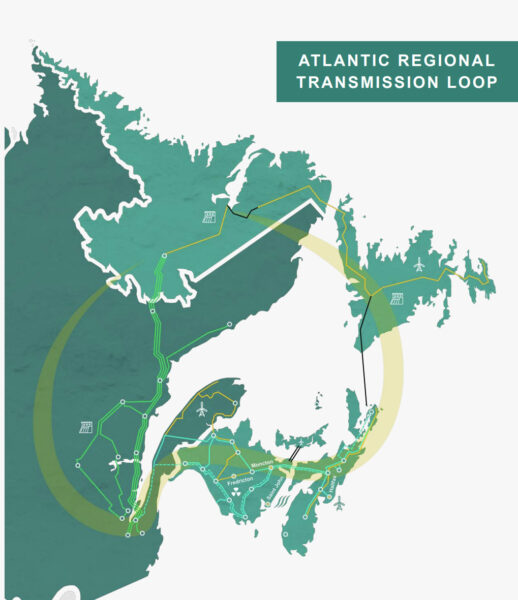
So the federal government has been pushing for an “Atlantic Loop” that would tie in all of Eastern Canada to massive hydro electric generating capacity in Quebec and Labrador. Think Churchill Falls, Muskrat Falls. Newfoundland has already built the connection between Labrador and the Rock. But the idea was to build undersea connections from the Rock to Nova Scotia. The idea was to get rid of remaining coal-fired power generation. Well, that fell apart in recent days. This Canadian Press story might talk about a “modified loop,” but it is really a collapse of the original idea. “Too expensive.” But if this is too expensive, how are we in Saskatchewan supposed to get rid of our coal and natural gas?

Suncor CEO called out on the carpet for no longer drinking the Kool-aid

What, actually caring about profits is bad now?

Kruger was at the House of Commons natural resources committee to explain comments he made to shareholders in August about reducing his company’s emphasis on the transition to lower-emitting energy sources.

Kruger said his comments were misinterpreted as Suncor ending its commitment to curbing its carbon footprint, when the focus is really on ensuring the company is making profits now to be able to afford the required investments in decarbonization.

Also, North American Helium opens its seventh helium processing facility in Saskatchewan. For those who might be counting, that’s the fourth in less than a year.

And Tourmaline buys Bonavista Energy

And the Energy Transition Podcast talks about threats multiplying to global energy security.


More reaction to Bill C-69 No More Pipelines Act, and another helium producer starts production

Here’s Alberta Premier Danielle Smith’s response, verbatim. I like doing these verbatim pieces because it allows the reader to hear the full-throated discussion, without a filter. It’s interesting how she talks about how the $20.6 billion Teck Frontier oilsands mine was killed by the No More Pipelines Act. That’s not chump change. Anyone think they might reconsider it? (That’s a trick question – Teck has since abandoned and sold off its oilsands interests – for obvious reasons.)

Also, after nearly three years of work since it drilled its first well near Climax, Saskatchewan, Royal Helium has entered into production with its first helium facility near Brooks, Alberta. This is transformational for the company, as it turns Royal from an explorer with no revenue to a helium producer, with revenue. Indeed, its production is already locked up in sales, so strong is the demand. And expect their next focus to likely be in Saskatchewan.

I’ll have another significant helium story posted for Tuesday morning. Exciting times, this.

Supreme Court rules against Bill C-69, the Impacts Assessments Act

The “No More Pipelines Act,” Bill C-69, ruled largely unconstitutional by Supreme Court of Canada

This is shocking. Name one other Liberal policy this Supreme Court has shot down? It totally massacred all the Conservative tough on crime measures (and look where we are now on crime…) So to do this is eye opening. However, I don’t get how the law isn’t struck down it it’s unconstitutional. Canadian Press wrote it, not me.

Just added:

Here’s the ruling.


Scope 3 emissions? What on earth is that?

Dr. Tammy Nemeth has been warning about this in her recent podcasts, and now the head of the TSX is doing the same. Small-cap companies not ready for climate disclosure rules: TMX Group CEO. Start counting those Scope 3 emissions, folks.

Along those lines, if they can’t protest you to extinction, they’ll litigate you. Greenpeace files securities complaint against Suncor over climate risk disclosures. 

If I take part in #protests, can I claim some sort of journalist protection, too? RCMP dispute photojournalist’s account of arrest while covering pipeline protest  

Hey, wasn’t this the guy behind the Kesytone Pipeline projects in the first place? TC Energy names former CEO Hal Kvisle as chair of new liquids pipeline spinoff.

And from the day before, Exxon buys Pioneer Natural for $59.5 billion. And here’s what it could mean for Canada. Isn’t that something like three times Canada’s entire defence budget?

Oh, and a University of Calgary prof is taking tactics out of a U of R prof’s handbook (I don’t think it’s the Communist Manifesto, but I could be wrong). Academic report calls for public inquiry into Alberta Energy Regulator. (The U of R prof sued her own university a while back, and yet is still employed.)

In Pipeline Online’s neverending quest to let the public know exactly what our federal government & Steven Guilbeault is telling us about climate change, here is a verbatim, unfiltered press release from Oct. 12 regarding the carbon tax in New Brunswick.

And our favourite minister, Steven Guilbeault, announced “Canada’s Circular Economy month in October.” Except instead of doing so on the 1st of the month, he did it on the 12. Maybe circular months have no beginning, no end. Think of Groundhog Day, with Steven Guilbeault telling us every day, forever, how we are horrible people…

Enbridge’s CEO has a lot to say about Canada’s lack of LNG development

It’s almost as if he’s making a business case for LNG. Imagine that. You know, the same thing the prime minister said there was no business case for? This is the verbatim speech he gave on Friday in Toronto.

Energy Transition Podcast Ep. 84: Coal is back – in fact, it was never gone.

Here’s something new – the Kindersley area took over half the dollars in the Crown petroleum right land sale last week. That’s highly unusual.

And, of course the Just about but not quite complete TMX pipeline will desecrate a sacred site.

A farmer, a pump shop manager and a superintendent walk into a liquor store …

Getting caught up on some energy items from Pipeline Online:

Letter to the editor on why activity levels are so low in the Saskatchewan oilpatch

“How low?” you ask. Just 29 drilling rigs working in Saskatchewan Oct. 3 (10 years ago, that number would have been around 90. During the depths of the downturn, it would have been 40-50.)

Tammy Nemeth’s podcast talks about net-zero red tape for small and medium enterprises in Canada. You think you have paperwork now…

Enbridge’s CEO had a lot to say this week:

Enbridge CEO op-ed on delivering LNG to global markets, reducing global CO2 emissions and supporting energy security. (He did a long speech, which I’ll be posting verbatim, if I have a chance).

Enbridge CEO calls for national Indigenous loan guarantee program so they can buy into energy projects, like pipelines.

And what do we need pipelines for when rail works so well? Except for when it doesn’t. Undetected broken rail causes fiery crude-by-rail derailment.

And for something completely different: A farmer, a pump shop manager and a superintendent walk into a liquor store … and buy it. No joke.

Forget a northern energy corridor to Hudson Bay – just do it within Manitoba instead

There’s an election today in Manitoba, so all bets are off if the NDP forms government. But on the off chance that the Conservatives hold power, here goes. The conservative premiers of Alberta, Saskatchewan and Manitoba have been talking about building a new port at Port Nelson, Manitoba, on Hudson Bay. They would build a corridor of pipelines running oil and natural gas to said port, as well as rail, allowing potash exports. Maybe grain, too?  And Power from Manitoba could run west. Anyhow, here’s an alternative way to look at it, probably for a lot cheaper than building over 1,000 km of pipeline through some of the hardest rock on the planet.

And on the topic of energy, any business in Saskatchewan who wants to get in on building multi-billion dollar nuclear reactors should get someone down to Regina Wednesday morning to attend this conference.

And the Energy Transition Podcast talks about France’s Macron going full Trudeau.

And the Coastal GasLink Pipeline is now 98 per cent complete.

Navigation