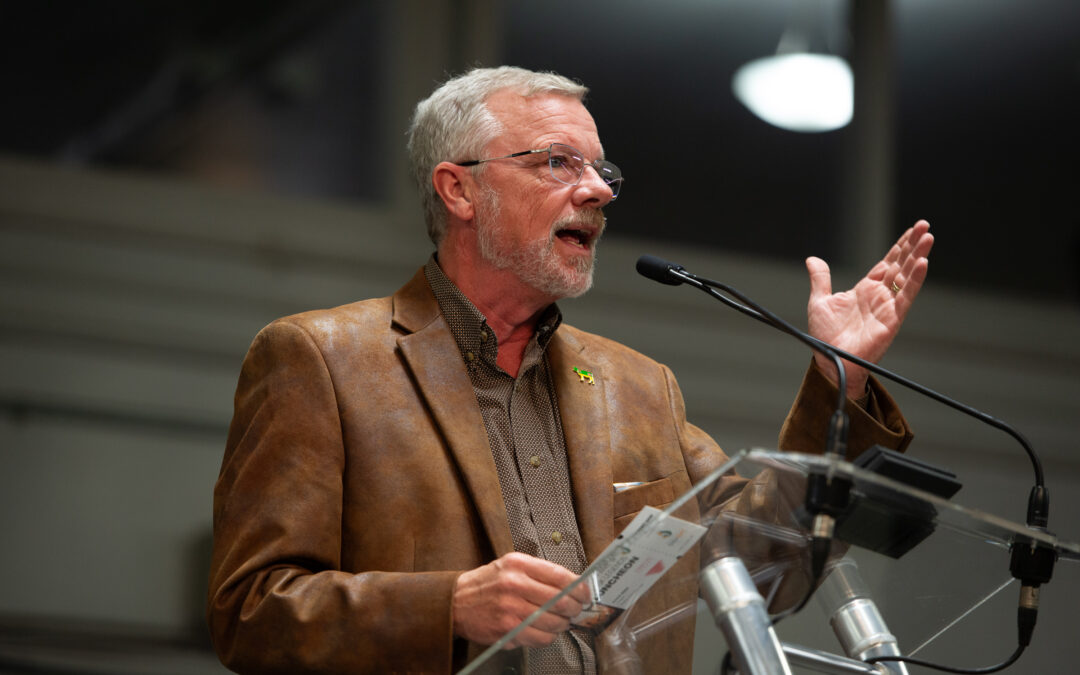
A former Energy and Resources Minister for four years, Eyre is joining Pipeline Online as a regular contributor, both as a columnist and co-host in an upcoming regular podcast that is rapidly coming together. Watch for Eyre’s continuing contributions on Pipeline Online in the weeks and months ahead.
Also:
Alberta wind power generation falls to less than one per cent capacity, once again (Last Friday, it fell to zero. You read that right. Zero.)
And, what’s this Bluesky Social all about? In the interest of staking territory, Pipeline Online is now on this new social media at @pipelineonline.bsky.social. If you’re on there, be the first to follow, I guess?
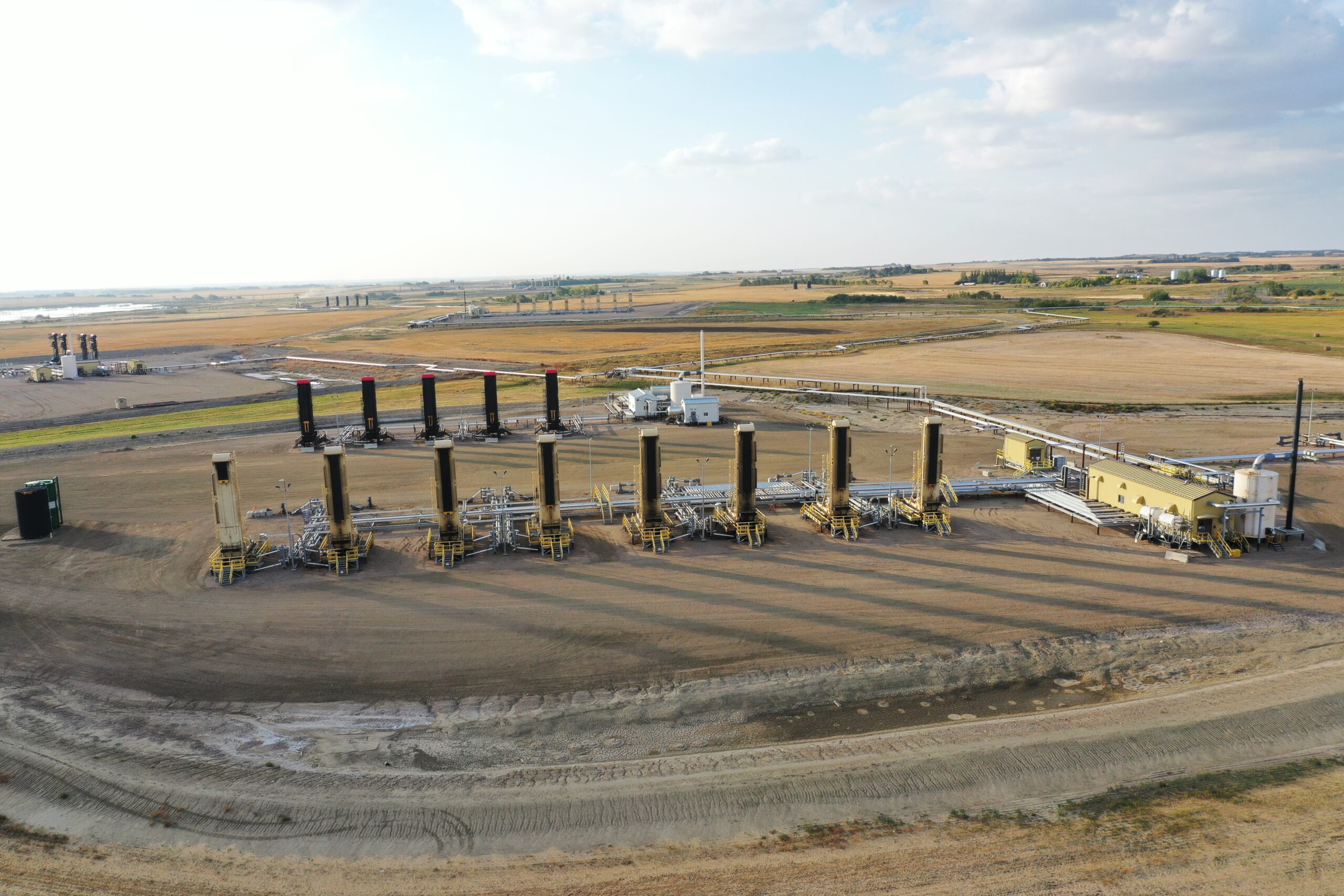
And what are going to use that CO2 for, pray tell? Producing more oil, baby! (Well, not the stuff that’s going into this well, but all the CO2 that’s going to go in the pipeline past it. You’ll have to read the story to understand.)
Oh, and here’s a bonus: the federal government wants to now subsidize radio news as well. Why do I hear the Emperor from the Return of the Jedi cackling in my head?
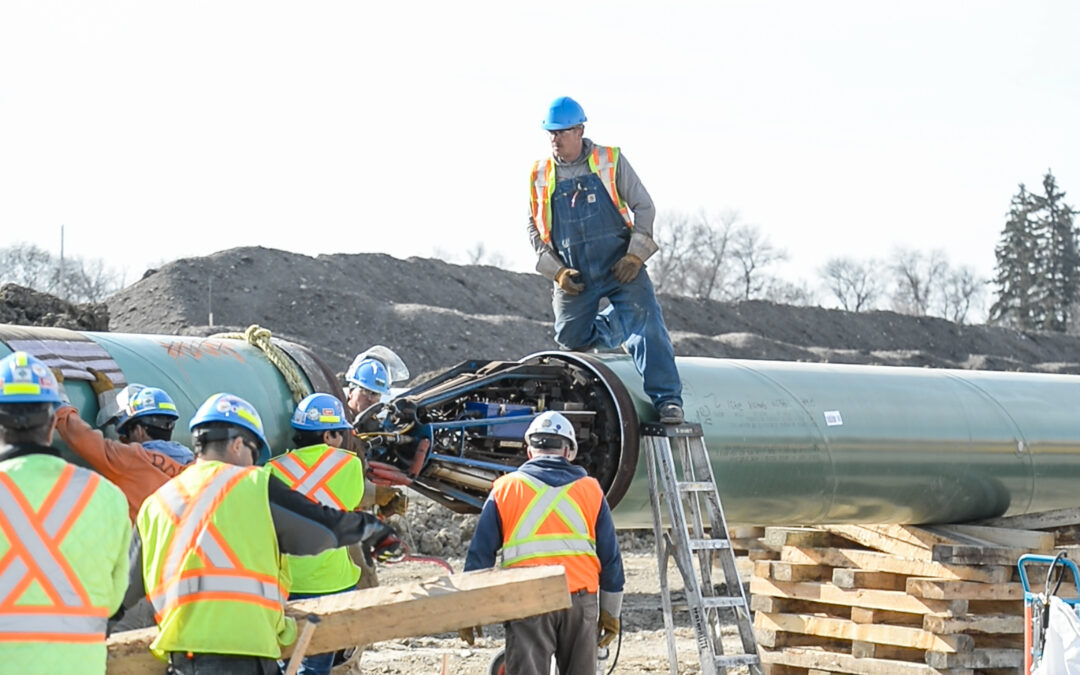
This is very significant, as the enormous cost overruns (6x over initial budget) of the Trans Mountain Expansion seemed to scare off anyone from ever doing a major pipeline in this country again. But that was the federal government running the show.
Historically, Enbridge built a new mainline pipe about every decade. The shot above was Line 3 replacement in 2017. The previous Alberta clipper was 2008-2009. And this new development is very likely so that Enbridge is ready to go with a new Conservative government in place next year. Thoughts?
The reality is that to get anywhere close to the oil production numbers Premier Scott Moe would like to see, an increase from 454,000 barrels per day to 600,000, we’d need to double, and likely triple the current number of rigs drilling for oil, which is 32. And even then, that would still be fewer rigs than we had going in 2013.
For the past decade, Quebec’s political parties have been arguing over who hates oil and Western conservatives the most along with which party can claim bragging rights for being the best at extorting benefits from the rest of Canada. Jim Warren hits it out of the park, again.
The Saskatchewan Green Party proposes to “Make Green Jobs the future of Saskatchewan’s economy by transitioning away from fossil fuels,” while financing its extensive socialist policy platform by modelling Norway which applies “a whopping 78 percent total tax” on oil and gas revenues.
Notably, it includes five pages discussing the Greens opposition to small modular reactors. And the policy document closes by saying on the last page, “How do we pay for it? The Saskatchewan Green Party is dedicated to building a prosperous future for our province. It is time to raise royalty rates in the oil & gas sector to levels that truly reflect the value of our resources. We would use Norway as an example. Norway has a 51 percent tax on petroleum-related income, on top of the 27 percent income tax. That amounts to a whopping 78 percent total tax. This is put into a fund to benefit all citizens.”
That page does not list any other major revenue source, or indeed any revenue source at all, other than heavily taxing oil and gas, the same oil and gas earlier in the document the party promises to transition away from. If the party does succeed in “transitioning away from fossil fuels,” (Page 17) it offers no other source of revenue on the “How do we pay for it?” page (Page 61).
Jim Warren:Could maximizing Canadian oil production and exports over the medium-term help reduce CO2 emissions for the long-term?
“There is a chasm of disagreement separating climate-concerned policy makers in Ottawa and supporters of the oil and gas sector on the prairies. Each side behaves like they’re playing a zero sum game.”
This is the third in a series of in-depth interviews with the parties vying for the Saskatchewan election. In it, NDP Energy Critic Aleana Young speaks about the NDP’s all-of-the-above energy strategy.
The greatest threat to nuclear development is not technological or even financial – it’s change in government. This was evident with the Site C Dam in BC, where a new NDP government pumped the brakes, but then ultimately went ahead with it. The NDP in Saskatchewan continue to support nuclear power development, but “we have to get it right.”
As I’ve done with the other parties, I reproduced everything I could find in the party platform related to energy. Well, the terms “oil” “natural gas” “potash” “critical minerals” “SMR” “nuclear” or “electricity” are not referenced within the document. But “healthcare” comes up 35 times.
Friday will be the Buffalo Party. So far, I have not heard from the Greens, PCs or Progressives. Wonder why? Is anyone else writing 3200 word stories on their energy policies?
On a side note, I attended a three hour long Estevan city council/mayor town hall this evening. It took 2 hours and 25 minutes before anyone made any serious comments about coal. That was right before I got my chance to ask about dealing with the impending eventual shut down of coal-fired power generation, but also preparing the city for nuclear power. Amazingly, about half of the 13 people on stage really had no substantive answer on that front, and several had no clue or hadn’t thought of it. You would think that would be the most important issue facing this city – much more important than sidewalks or boulevard flowers (which got more discussion up until that point than coal or nuclear). Especially since the nuclear built out will be the most costly infrastructure project in Saskatchewan history to date. (If I attend a forum like this, you can be damned sure I’m going to ask the toughest questions.)
In Pipeline Online’s quest to ensure we all know EXACTLY what the feds are telling us on energy, I have a series of press releases from this week, which I’ll post over the weekend.
To rectify Canada’s sinking economic status, we need to fix our energy regulatory framework to be timely, predictable and simpler. Along the way, we need to include Indigenous people and their investments.
Those were the messages by Lisa Baiton, president and CEO of the Canadian Association of Petroleum Producers, in her keynote address to the 10th annual Saskatchewan Industrial and Mining Suppliers Association (SIMSA) Energy Forum.
Pipeline Online is attempting to do in-depth interview on energy policy with each of the parties involved in the Saskatchewan 2024 general election. First up: Saskatchewan United Party:
“I believe I’ll be able to get energy down to 50 per cent – 50 – five-oh – of what it is right now within a period of less than a year.” – Donald Trump
If he drops oil prices by half, Alberta, Saskatchewan, Newfoundland and Canada overall will be in a world of hurt.