Good evening ladies and gentlemen, welcome to SDA Late Nite
Radio. Tonight, for your delectation, here are Blind Boy Fuller
& Sonny Terry performing Stop Jivin’ Me Mama (1938, 2:38).
Your Reader Tips are, as always, welcome in the comments.

Good evening ladies and gentlemen, welcome to SDA Late Nite
Radio. Tonight, for your delectation, here are Blind Boy Fuller
& Sonny Terry performing Stop Jivin’ Me Mama (1938, 2:38).
Your Reader Tips are, as always, welcome in the comments.
Pick the Continue Reading link for George Friedman’s
above titled essay, from Strategic Forecasting Inc. (via
www.stratfor.com, permission granted to reproduce here).
 |
Good evening ladies and gentlemen, welcome to SDA Late Nite Radio. Tonight, for your delectation and because I like polkas, and as polkas go, I really like the ending of this one, here is an SDA LNR encore presentation of the Vienna Philharmonic Orchestra performing Johann Strauss‘s Freikugeln Polka ¤, op. 326, Claudio Abbado conducting, in 1991 (2:30).
Your Reader Tips are, as always, welcome in the comments.
Good evening ladies and gentlemen, welcome to SDA Late Nite
Radio. Tonight, for your delectation, here is DJ Dado performing
his version of X-Files ¤ in 1996 (3:55), with an interesting video.
Your Reader Tips are, as always, welcome in the comments.
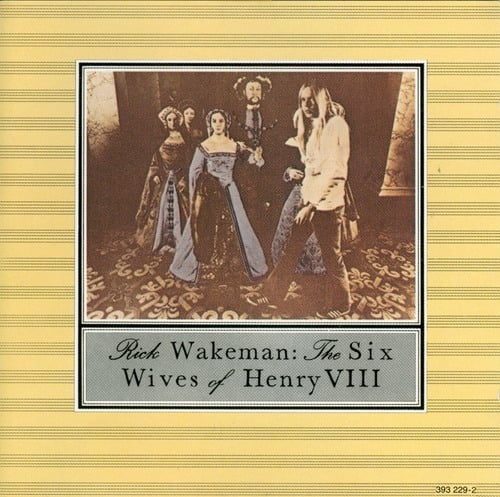 |
Good evening ladies and gentlemen, welcome to SDA Late Nite Radio. Tonight, for your delectation, here are Mr. Rick Wakeman and the boys performing Anne Boleyn, from his The Six Wives of Henry VIII album in 1973 (6:37). Personally, my favourite track from my copy of the vinyl here in the studio is Jane Seymour (4:51), though I figure it to be of rather less general audience appeal, even though I’m sure that if Bach had been able to pull off that section from 02:45 to 04:10, then he definitely would have put something like it in his Toccata & Fugue in D Minor, BWV 565. The parishioners would have freaked out, man (which was the whole point of having thirty-two- foot pipes in the first place: hallucinations in the pews). Alas, J.S. didn’t have access to an appropriate ramp-frequency synthesizer in the church at that time. Hell, he didn’t even have a piano yet, and a saxophone would have been sacrilege.
Your Reader Tips are, as always, welcome in the comments.
 |
Good evening ladies and gentlemen, welcome to SDA Late Nite Radio. Tonight, for your delectation, here is something you probably haven’t heard for a while: John Mills- Cockell on Arp and Moog synthesizers and keyboards, Doug Pringle on saxophone, bongos, guiro, and bells, and Alan Wells on congas and percussion, as Syrinx performing Tillicum (1971, 1:57) from their Long Lost Relatives album (a copy of the vinyl of which we have here in the studios), and which you will no doubt now recall was the theme song for the CTV network’s Here Come the Seventies show, which ran from 1970 through 1973.
Your Reader Tips are, as always, welcome in the comments.
Welcome to the Wednesday (EBD) edition of Late Nite Radio. Tonight we feature some social/political satire from Britain, in the form of a recurring series of sketches from the Armstrong and Miller Show, which premiered on BBC 1 in 2007. In these skits Alexander Armstrong and Ben Miller superimpose the attitudes and dialect of stereotypical, modern-day, rights-entitled youths onto two RAF airmen in WWII. The absurdity of it all manages to be darkly instructive, caustic and amusing in equal measure.
Without further ado, then, here are Armstrong and Miller’s WWII RAF sketches parts 1, 2, and 5.
I don’t want to be restricting your rights and stuff, so, like, leave your Reader Tips and this and that in the comments.
Good evening ladies and gentlemen, welcome to SDA Late Nite
Radio. Tonight, for your delectation, here is Lester Young with
Oscar Peterson, Barney Kessel, Ray Brown, and J. C. Heard
performing Stardust in 1952 (3:31). Adolphe Sax is smiling.
Your Reader Tips are, as always, welcome in the comments.
Good evening ladies and gentlemen, welcome to SDA Late Nite
Radio. Tonight, for your delectation, here is Mr. Drew Carey
performing some of his classic Stand-Up Comedy (6:35).
Your Reader Tips are, as always, welcome in the comments.
Good evening ladies and gentlemen, welcome to SDA Late Nite Radio. Tonight, for your delectation, here are the Vienna Philharmonic Orchestra performing, from Ludwig van Beethoven‘s Egmont, the Overture ¤, Op. 84, Leonard Bernstein conducting (9:02).
Your Reader Tips are, as always, welcome in the comments.
Good evening ladies and gentlemen, welcome to SDA Late Nite
Radio. Tonight, for your delectation, here are The Cynic Project
performing Dream Formula ¤ (2000, 3:12).
Your Reader Tips are, as always, welcome in the comments.
Good evening ladies and gentlemen, welcome to SDA Late Nite Radio. It has been said by some that the most difficult discs to jockey are those of stand-up comedy, because it is so easy for some to take offense. On the other hand, Oscar Wilde said that “If you want to tell people the truth, make them laugh, otherwise they will kill you”. So, casting all caution to the wind, pace the risk, tonight, for your delectation, here is a medley of Mr. John Pinette performing his Stand-Up Comedy ¤, and Part II ¤. John’s Get Out of the Line! sketch, in part two, is, I think, brilliant, and his whole nay, nay shtick in part one is delightful. You know why it has a safety bar? Because it’s not safe!
Your Reader Tips are, as always, welcome in the comments.
Good evening ladies and gentlemen, welcome to SDA Late Nite
Radio. Tonight, for your delectation, here are Ian Anderson and
Jethro Tull performing Living In The Past ¤ in 1969 (3:17).
Your Reader Tips are, as always, welcome in the comments.
Tomorrow is the eighth anniversary of the attacks on the World Trade Center. Tonight we present Montreal boy Leonard Cohen singing the elegiac On That Day, from his 2004 album Dear Heather.
You are invited to provide your Reader Tips in the comments.
Good evening ladies and gentlemen, welcome to SDA Late Nite Radio. Tonight, for your delectation, here are Herbie Hancock, Freddie Hubbard, Joe Henderson, Ron Carter, and Tony Williams performing Cantelope Island ¤, from the famous One Night with Blue Note film, in 1985 (10:44).
Your Reader Tips are, as always, welcome in the comments.
Good evening ladies and gentlemen, welcome to SDA Late Nite Radio. Tonight, for your delectation, here are Bill Monroe and the Blue Grass Boys, featuring Tom Ewing, Blake Williams, Tater Tate, and Billy Rose, performing Old Daingerfield ¤ (1988, 3:37).
Your Reader Tips are, as always, welcome in the comments.
Good evening ladies and gentlemen, welcome to SDA Late Nite
Radio. Tonight, for your delectation, here is archival footage of
our old friend Princess Yma Sumac performing Chuncho ¤ (the
forest creatures) ca. 1955 (3:37).
Your Reader Tips are, as always, welcome in the comments.
Good afternoon ladies and gentlemen, welcome to this week’s SDA distinguished lecture, documentary & interview symposium. This week, for your delectation, here from the Science Futures series by the San Diego Science and Technology Council’s Center for Ethics in Science and Technology, and UCSD-TV, is Baroness Onora O’Neill, Principal of Newnham College at the University of Cambridge, presenting her Why Doesn’t the Public Trust Scientists? ¤ lecture, in 2005 (58:32).
I should like to note that while “Scientists” are the exemplary referent matter in today’s lecture, Baroness O’Neill’s considerations (for example, that one can’t replace trust with trustworthiness [quis custodiet ipsos custodes?], statutory regulation, post hoc accountability, &c) apply more broadly to the matter of the public trust of any and every public profession and institution, including politics and the law.
Good evening ladies and gentlemen, welcome to SDA Late Nite Radio. Tonight, for your delectation, here is Gerald More as Raymond Chandler‘s most famous character, Philip Marlowe, in The Final Payment episode of the Adventures Of Philip Marlowe (1950, 29:04).
Your Reader Tips are, as always, welcome in the comments.
Good evening ladies and gentlemen, welcome to SDA Late Nite Radio. Tonight, for your delectation, here are Peter Kruder & Richard Dorfmeister performing High Noon ¤, from their Summer Sessions album, in 2001 (4:40).
Your Reader Tips are, as always, welcome in the comments.