
As so many of you contributed with advice, I owe you an update.
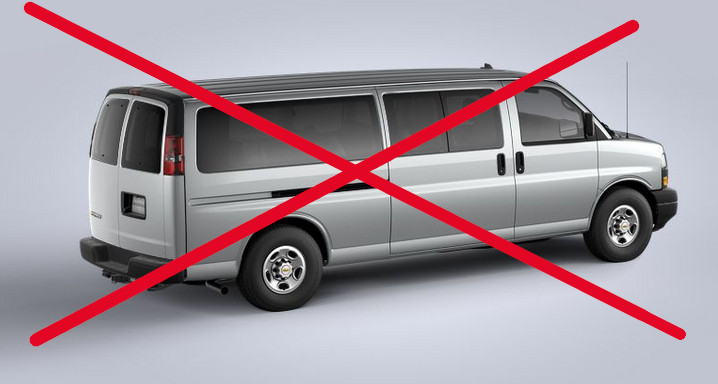
It broke my heart, having waited months, but I’ve cancelled the factory order. Back to the drawing board. But I may have a lead on a Savana 15 passenger 4wd conversion, so there’s that.
Original post below.
*******************
Only for those who have direct experience, please.
About half a dozen times a summer, I tow this 17ft toyhauler to destinations no further than a 500 mile prairie radius (Calgary, North Dakota. etc).
Last summer, I ordered a 2023 Chev Express 3500 passenger van, with the 6.6l V8 to replace my old Ford E350. 12 – 18 month wait.
Today the dealership called to advise the engine is no longer available, and now only has the 4.3L LV1 V-6 (8 speed).
OTOH, this van will be doing trips without a trailer as far as the US east coast and California.
My question — again — is only for those of you who drive late model Chev V-6 trucks. How would you rate the real world towing capacity of this engine?
No snark, and no speculation, please. Just real world experience. This is important.
***
Thanks all, now I have a headache. Ugh.
Engine too small for that much weight. Remember it has to haul itself also.
Chevy lost me 2 jobs 20 years apart, so I don’t think they’ve learned enough
in the last 20 to make something reliable.
I will note one thing Kate ,(from personal experience) that an undersized engine will do the job, BUT you will spend more time in lower gears which translates into higher fuel consumption and greater engine / transmission wear. So more frequent servicing, (fluid changes all around etc). Also check the differential ratio of the smaller engine vehicle as it most likely has a lower gear ratio in order to accomodate the lower horsepower engine and that translates into more rpm’s to travel the same distance as the larger version.
In my 55 years of hauling I would not go the V6 route and hope to be satisfied with the unimpressive results.
Towing requires toque. The smaller the engine the harder it works and thus the more fuel it burns too.
If you are towing lots a diesel is the way to go because they produce much more torque at much lower rpm’s.
Way too small of a engine. For pulling big trailers no less than a 350 cu in Chevy, if light loads example holiday trailer. Heavy loads you need at least 6 liter or 400 cu. in and up.
I used to haul stock trailers etc and you need the 3/4 T to 1 T plus big block not only for engine size but for braking and stability. That is my advice if towing is primary use.
For travel only the V6 is fine.
Anyway my 2 cents
“Way too small of a engine. For pulling big trailers no less than a 350 cu in Chevy, if light loads example holiday trailer. Heavy loads you need at least 6 liter or 400 cu. in and up.”
Absolutely. There is no substitute for cubic inches when it comes to towing. As others have mentioned, you *can* tow with a smaller engine but you will be doing it at higher RPM and in lower gears, and your gas mileage will be awful.
True story: I knew someone back in the 80’s who had a Chev pickup with a 350 in it. He would tow his trailer from Vancouver to somewhere in the interior (Fernie, I think) to go hunting every year, and complained bitterly about how much gas it cost him. His wife went out and bought a Chevy Suburban with a 454 in it. His pickup was having mechanical problems one year so he decided to put a trailer hitch on the Suburban and use that instead, but was convinced that it was going to cost him even more money in fuel. I told him no, it would be less, and explained why (torque, gearing, etc). He didn’t believe me. We bet 50 dollars on it.
Needless to say, I won…but he paid me with a smile on his face. Roughly HALF the gasoline consumption with the Suburban, and he “cruised right up the hills without slowing down” (in his words).
Find an older vehicle with power and in good shape you will be better off. I controlled a fleet, tractor trailers, in one of my incarnations and I would not buy anything new to haul anything with any weight these days when you are talking todays non commercial vehicles. We ran our units for ten years, five on warranty, five on our own dime by the time ten came up, new was required. I would not want to be buying new these days.
I had a vehicle with the 4.3 V6 in it that I put about 350,000 km on. It was a great engine but for a 1T van or for towing a decent sized trailer, I don’t think so. Too small or too wee, as they say across the pond.
I have a 2006 F150 w a 4.2 V6. 4 speed trans. It’s a good engine and I think nothing of loading the truck. I just towed U-Hall longest trailer(12′) and the truck loaded with a high top cap all down the east coast( 1,200 miles) Truck did fine. I let the trans figure it out.
Rolling mass down the highway isn’t much stress on a power train. I-95 doesn’t have any big mountains.. Rockies would would be tough.
I think the 3500 van is over kill.
I imagine the van is loaded and the toy hauler too. So no I wouldn’t go with a V6.
Id do a 2500 with a near 5L V8. A occasional 500 mile 4 times a year isn’t going to wear it.
If it was in spec I’d even look towards a regular 1500 with a tow package. Specs is specs.
I’m kinda with you on older vehicles now. I can repower my truck for $4k. It’s just a tool. I’m not spending ten , fifteen times more for a new tool, when the old one is fine.
Most of her wear and tear is around town. That 3500 is a bit of weight to just go to the store.
Nope not a Chevy owner but I agree with VOWG, buy used, not new. Used; cheaper, cleaner (fewer gov mandated dodads), often far more dependable.
“Nope not a Chevy owner but I agree with VOWG, buy used, not new. Used; cheaper, cleaner (fewer gov mandated dodads), often far more dependable.”
Doesn’t even need to be old: buy something one or two years old and save thousands. It’s still new…you just let someone else absorb the depreciation.
According to Chevrolet Canada’s website the 6.6L is still available for the 2023 model year.
Or is the problem that they cannot locate one? I checked inventories in Ontario. There are very few Chev vans of any sort. Most have the 4.3.
But there are a couple of 2023 cab chassis with the 6.6. So that motor is available.
Like this one: https://www.spadonimotors.ca/new/vehicle/2023-chevrolet-express-cutaway-4500-4500-van-id11852992.htm
You might want to press the issue.
I know, but apparently they’ve stopped putting them in vans. there’s no inventory, its in the pipeline for factory order. Nobody told the webmaster.
By the way — good luck finding late model low mileage vans with v-8 engines.
Lovely. I guess this is all part of the “Just Transition”.
I hope you can find a good alternative.
Towing a 5th wheel toy hauler with a van could very well an issue.
The V-6 could be the least of your problems.
It’s standard tow.
Had a van (VAN) early 80s and have a 5th wheel at present.
My van would have needed considerable body work to accommodate the 5th wheel.
My 6.7 Ram 3/4 works fine for pulling the 5th .
I believe Kate’s model of trailer, from her link in the post, is a standard, bumper tow trailer. 5th wheel won’t be an issue with her van (or whichever vehicle she ends up with) as it will be attached at the bumper.
Engine power is one thing, getting it to the wheels is another.
A long time ago I spent some time behind the wheel of a FORD-F100 4wd, with a 351? V8 and a manual transmission and dual-plate clutch. Hard-work in city traffic, LOTS of exercise for the left leg. Out on a good road, a breeze. The owner had fitted an “overdrive” kit and highway mileage was not too bad.
I later bought a “pre-loved”, ex-ambulance built on a long-wheelbase F-100 cab / chassis. 302 with a C4 slush-box..
Interesting to park at the the shopping centres. Thirsty!. 12 MPG under “normal” conditions, but over 60mph, you could watch the fuel-gauge needle move towards “E”.
Transmission overheating was a problem when the truck body was full of creature comforts and I hitched up the 3-bike trailer; (Three 490 / 500cc enduro machines, plus fuel, oil, spares and tools) for a bit of dirt biking A new (bigger) cooler for the transmission fluid helped.
Something about; “NO FREE LUNCHES”.
I had 4.3, then bought a bigger boat. (17 ft Fish Ski) Took the boat from London to Sudbury. Had to put it in Tow gear most of the way. Doubled my gas mileage. Changed to the 4.8 after 2 years. 4.8 was the better choice. Much easier to tow with it.
But shouldn’t you be buying one of those pretty electric trucks for $170,000?
I had a 2021 Chevy 1/2 ton with the little 4 cylinder turbocharged gas motor. Awesome little engine for hauling its own self around. Towed a 18 ft enclosed sled trailer and 3 mountain sleds all over BC last year. Fuel mileage in the rockpile was good as usually your max speed was around 90km. However when I got out to the Prairies and tried to keep up with traffic my mileage dropped down to 29 litres per hundred. The engine had no problem getting up to speed but the hampsters had to be racing really fast to make the horsepower.
I rented a nearly new Chev van with a 6 spd v6 last summer – Lethbridge to Calgary and back. Hated it. Low torque relative to body weight (but has enough HP at higher revs to break speed limits), pushed forward driving position, felt unstable in high winds – one of those days in southern Alberta – slow/weak braking, and required nearly continually steering input. Would not want to tow anything big with it.
Next trip I used a Ford cargo van (one of the very high 20′ load bed ones – 10 speed 3.5L V6 + turbo (“ecoboost”)) – had 89K clicks on it, felt brand new. Solid steering control, lots of torque and HP, didn’t bounce in the wind, brakes worked, but had undersize tires (National truck Rentals doesn’t spend much money on wheels/tires). I did not tow anything with it, but it felt like it could tow building.
Bottom line: I agree with others above: if you can find a used Ford with a maxed out engine and a solid maintenance record you’ll be much happier than with a new chev – and you’ll be able to walk and talk after driving a few hundred clicks.
Yeah, I love my 2008 E350 workhorse, despite the horror stories I was told about the 5.4l engine. But it’s getting up in miles, and has severe rust over the windshield, and I have to replace it. I hate the Transits with the low clearance and small wheels. Chev is all that remains in that all-purpose truck chassis body style.
2005-2010 5.4s are gems. I have a 2010 F150 and the only thing I’ve done in the engine compartment other then the usual is a power steering hose.
Engine has never been apart. Same with the diff and the trans. Come to think of it, original lube in both.
Why not go with a 3/4 ton crew cab from any of the big three, you can get some serious HP and even more important more torque. With one of these you could tow that trailer like it wasn t even back there. If you want to tow something heavier get a Duramax or a Cummins diesel you will not regret the extra dollars required.
Kate, you mention you hate Transits, how about Sprinter? Not clamming to be an expert on vans, but last summer I spent a bit of time in a Sprinter RV conversion (it had a 3.5 gas engine IIRC) and despite its heft it performed fairly well and didn’t feel underpowered around Algonquin and a bit further north.
Not sure if the vans have cylinder deactivation, if they do the sound will annoy the heck out of you on the highway, if it ever even kicks in towing.
The Chevy van 4.3s do not.
The Ford EcoBoost engine is really good
First year was 2016 and there are a few known issues but V2.0 came out in 2017 and things are solid.
DaveH
Eco blaster is a hi pressure engine, and goes through plugs like shit through a goose, But they do tow good. I had 15K behind mine, and NO problem.
2013 Ford F-150 with the 3.5 eco. The engine threw the crankshaft timing gear at 140.000 miles. Asked Ford for help because the dealer no any other shop has seen this type of failure. Ford motor company said So sad, but to bad. )-:
$8.000 for the new engine and $9.000 t install it.
I sold it a month later.
If I were you, I’d look at the new 6cyl Duramax all in a 1500 chassis.
23 mpg city / 33 mpg highway.
277 horsepower.
460 lb-ft of torque.
9,500 pounds of towing capacity.
10-speed automatic transmission.
All in a Standard 1500 series Sierra or Silverado of your choice of trim: SL, SLE or SLT
Superb mileage and enough balls to pull THAT little trailer..easy.
Not all that sure they are putting them in vans, but crew cabs for sure….Price as with all new diesels is not cheap, but a far cry from a 2500 Denali Duramax @ ~ 115,000 thou.
Agreed with all above. For pulling any weight RV, its not so much the weight as the giant Sail behind your tow vehicle…. min for gas engine IMO, is a V8…and if staying with gas, I’d go 6L.
But been a diesel hound for 20 yrs…
Just a note to all: Going to the Calgary airport for a week or longer..?
Leave your vehicle at home. I had my beloved 06 LBZ Duramax Stolen after coming bk from a 21 day shift up North. Apparently the parking lots and garage is considered a smorgasboard for car thieves…bastards They need to be treated to 1816 style justice:
Oak Tree meets Hemp rope.
I can’t use a pickup, I need space for up to 8 dog crates, plus sleeping area for non-trailer trips.
Can you get the crates in the back of a Suburban if the 2nd and 3rd row seats are down and flat? You can get a 6.2l gas engine in either Z71 or GMC RST models. Just a thought, plenty of towing power and comfort but maybe expensive.
Kate: I haven’t read all the replies but the 2023 Ford Transit Cargo Van has an optional 3.5-liter twin-turbo EcoBoost V6 that develops an impressive 310 hp and 400 lb-ft of torque. That’s pretty close to the specs for your 401 horsepower, 464 lb.-ft. of torque 6.6 litre V8 Chevy and the 277 horsepower, 460 lb-ft of torque diesel pickup Steakman mentions above. It is the torque value that is most important for towing. It would get better mileage than the V8, assuming your toys are not light armoured vehicles, but not as good as the diesel.
Worth a test drive with the toys in tow, at least.
https://carbuzz.com/cars/ford/transit-cargo-van/performance
Just make darn sure to change the oil (ALL the time)
The 3.5 has an issues with dirty oil. Even if you change it at the factory setting.
Change it at 3000 to 4000 mikes.
I gotcha Kate.
Im curious if you could order saud van with the 6cyl Diesel..?
I have some good friends at Carter Chev Olds in Calgary, I shall pose thatt question.
Stay tuned.
Theo
It used to offer the 4cyl diesel, but no more.
I just bought a new GMC Sierra with the small six-cylinder Duramax diesel. I bought it due to the poor fuel economy of my 6.2 L pickup truck. It does a trailer full of snowmobiles or ATVs without problems; however, the gas mileage, with or without towing is poor. I feel I have been sold a bill of goods on the fuel economy as there is no benefit either in towing or fuel economy as diesel prices are 30% higher than petrol. There is a truly minor difference in range despite the advertisements and there are no financial savings. However, it does tow well and is not as front-heavy as the 6.2 L.
What about a new Toyota Sequoia or a used 2012-2020 Lexus GX 460 with the V8?
Further: this isn’t about V6 vs V8 – it’s about torque across the full range. My Volvo makes 347 HP and 325 ft-pds (V60 T6 Polestar) out of a four cylinder. For towing you need torque (particularly low end torque) rather than horsepower and the more of it you have, the better you’ll feel after a long day’s travel – and the less you’ll pay for maintenance and repairs.
You must consider weight of pull vehicle versus trailer as well. A 2,000 lb car with a good torque will not pull a 4,000 pound trailer well because, inertia, mass, momentum, wind, and drag. Torque is all fine and good, but a small car with good torque will only survive half as long, mechanically.
Kate, why don’t you put a cab on a pickup and get an F250 supercrew and an eight foot box, with sliding back window? The new turbo diesel offers over a 1,000 lb of torque at low RPMs, and when the wind blows on the open highway, nothing is going to move you. The additional strength, and it being a diesel will last you until the day you die.
I can’t have dogs in a cap at +80 or -20.
You could have it retrofitted with additional cooling/heating.
” My Volvo makes 347 HP and 325 ft-pds (V60 T6 Polestar) out of a four cylinder. For towing you need torque (particularly low end torque) rather than horsepower and the more of it you have, the better you’ll feel after a long day’s travel – and the less you’ll pay for maintenance and repairs.”
That reminds me of the Chrysler/Dodge “Hey, you got a HEMI in that thing?” series of commercials.
What they didn’t tell you is that, yes, it is a Hemi and yes, it develops lots of horsepower *at the right RPM*, but is no match for the classic old 426 Hemi that we all knew and loved…it just didn’t have the cubic inches.
There was a guy in the 70’s who got 500 hp out of a Pinto 4-cylinder (Ak Miller?) with a turbo. Luckily he never tried to tow anything with it… 😉
I had a 4.3 in a Safari. Used it for 15 years lighter duty. Great little engine. It was described as a sawed-off 350 (same bore and stroke, just V6 instead of V8).
I towed a 17ft fiberglass boat with no problem. The heaviest towing I did was a 12ft horse trailer with 800-1200 lbs livestock from Saskatoon to Winnipeg. Probably a 5-6,000 package total weight including the van. The van felt it, but made trip.
Towing depends on the engine, transmission and brakes. The vehicle specifications should indicate its capacity. I would guess 5,000 lbs with a transmission cooler.
I have seen people tow large items with little vehicles and appear to get away with it. The best towing advice I heard was not about engine, torque or suspensions, but the right question: it isn’t how much you can tow, but how long. A lighter duty vehicle will work near its rated capacity on occasion, but if you regularly tow 5,000lbs then the engine and transmission will wear out. These might overheat on the road and the brakes may fail the one time you need it.
“I had a 4.3 in a Safari. Used it for 15 years lighter duty. Great little engine. It was described as a sawed-off 350 (same bore and stroke, just V6 instead of V8).”
I have a 2005 Astro Cargo with the same motor. Yes, it’s a 350 with the front two cylinders chopped off, which is why they all idled so poorly…V6 with a V8 cylinder angle. Great torque for a V6, though.
Tom,
I had one of those and to be honest, tough old van…but horrible mileage…and not very comfortable with that huge bulge between the 2 front seats…
That was my experience..
🙂
What about a Ford V6 with Eco-boost?
https://www.ford.ca/commercial-trucks/transit-cargo-van/features/capability/?intcmp=vhp-featcta-capability
If you pull heavy loads with the eco boost the fuel mileage goes to crap and the turbo is heavily taxed that will result in early replacement. The eco-boost shine with highway mileage without any load or weight to pull if kept below 65mph.
Been there done that. And the turbos are not cheap.
I like my F-250 diesel for towing my 5th wheel toy hauler, but it is 36 feet. I have an F-150 with the 3.5 turbo 6 in it, for a smaller ball-hitch trailer like yours I think you’d be fine. The V6 has plenty of power, and after 4 years still no issues with anything. Mileage is not so bad either.
Go for the Ford van maybe? V6 with a turbo, could be worse. Cheaper on gas than the V8 for sure. Should be possible to find a used one as well, save some money there.
Panty boi
My V8 ford is cheaper on gas than my 3.5 eco boost.
I have a 2018 Silverado with an 8 speed. 5.3
Roughest shifting tranny I’ve ever had.
I like the 5.3 engine.
Get a six speed or a 10– no more 8 speeds for me. Had a 2012 with a six speed …beautiful shifting.
And I think you’d want a few more ponies.
Jmo
Like the safari hunter in Kenya who dropped a wounded charging Cape Buffalo at about 25 feet.
He turned and looked into the camera holding his 600 express and said “ always always use…enough…gun!”
In other words always lean towards overkill in a tow vehicle.
The bigger and stronger your tow vehicle the more comfortable and safer you will feel and be.
And newer isn’t necessarily better.
Ive
As a Duramax owner of 06 vintage, I could not agree more.
I have a suggestion. Try renting a similar van to what you are looking for on your next trip with the trailer. If you’re satisfied with the performance, go ahead and get it with the 4.3 litre.
Based on the specifications provided by GM and Forest River, the fully loaded combined weight for van and trailer is 14,080 lbs. The van with a 4.3 litre V6 has a GCWR of 15,000 lbs. Chances are that you won’t be hauling around the maximum weight anyway.
When we purchased the Chev 3/4 ton in 1998, it had a 350 instead of a 454 (like we wanted). I have had no complaints with its performance.
I was going to include links to the sources but your moderation software sent me to moderation hell.
If you want a 1500 and want towing try that new duramax. It’s an inline six diesel. Test drove and found it had signifigant torque from start.
Had this new 6.5 foot box as well.
Its worth trying.
We bought a 2016 3500 Nissan NV 12 passenger with 77k kms this past spring. Took out the back 2 seat rows and installed 3 Ruffland Kennels above the wheel wells facing the rear doors (one lg, two intermediate). Then put 2 XL Ruffland kennels with side doors behind the 2nd row seats in an L config. These XLs each hold 2 – 55 lb dogs. We can take 7 pooches with us, 5 people and pulls a 28′ holiday trailer like it’s not there. They don’t make the 12 passenger but can find used though scarce. Not terribly easy on the juice however but liking the set-up. Ugly as homemade sin but dogs don’t seem to mind.
https://app.drivingforce.ca/sales?page=1&km_from=&km_to=&price_from=&price_to=&year_from=&year_to=&activeTypeCategory=Vans&activeTypeTags=&chbListMakes=Chevrolet,GMC,&selectedLocation=
These aren’t new and they have 6.0L V8’s but they might be an alternative.
Something that will likely be in good supply in these times of high fuel prices will be class-C motor homes. Something in the 19-21 foot range could meet your needs and still be able to pull the trailer, depending on the engine. I would imagine there are a lot of these vehicles out there for sale these days.
My 40′ class-A tows my 17′ cargo trailer just fine, heh.
Good luck.
Crazy idea-
If you can’t find a van with a v8, how about a small RV/motorhome?
If I had an extra $100K to throw around, I might. When I initially began the search, buying new turned out cheaper (and still is) than what the used market was offering, and I was able to select the options I needed, like a sliding side door and tow package.
Check other dealers, especially in the north, or heavy industrial areas. Many medical bus and contractor operators use lots of them, showing a few here and there on the web, as long as you like white and need 12 passenger seating. Seating is removable. Showing the odd brand new 2022 as well.
Sounds like they have you by the balls on this one. I have towed many loads with F350 diesels, Gas V6 and V8 and just like previous comments you will burn way more fuel and put more wear on the engine/tranny.
Buy the new one on order and sell it once warranty runs out……
If I may suggest Kate
If and when you get what ever vehicle I highly suggest putting in AMSOIL SYNTHETIC LUBRICANTS in it after break in. Engine oil, Transmission fluid and rear differential oils.
You will be doing the best you can for that vehicle in lubrication and fuel efficiency.
I can help out but I know there are plenty of place in your area to get AMSOIL.
https://soslube.shopamsoil.com/
PS. We had the v6 in our GMC shop van and it was a work horse.
BINGO… Used it for years. Worked great when going deep into Mexico on very hot days.
Bigger motor rules, gearing important too. Small is fine for roundabout, not heavy loads or towing.
City mileage in big motor, may notice, highway mileage with undersized you will definitely notice. Screaming all the time, and actually a risk in my opinion.
Had a old Ford with a 460 in it, town was ugly, highway 20 plus, load/no load, just idling along at 110. A/C or not, loads on trailer not an issue. Just a brute, rock solid. Prior truck, smaller engine, couldn’t pull nothing without downshift and high revs. Couldn’t pass a gas station, frustrating to say least.
Go bigger, diesel if you can (torque advantage), look at alternates that can be rigged to do what you want. Myself, diesel all the way in my stuff.
Nothing perfect, a fact, but, choices and best fit for you, all you can do.
I tow a 3500lb dry lightweight 23 ft hybrid trailer (2 axel) with a 305hp 4.8L V8 Sierra 1500. The tranny is 4 speed, so not the smoothest but has a “tow mode” and the rear-end is a 3.70. I have a decent trailer brake controller. Overall between the tow vehicle and trailer seem like an ok match. Pulling up a big steep hill or going up a mountain pass the truck has a hard time holding 95 km/h at 4200 rpm. But those moments don’t happen too much. Still a bigger engine like a 5.3L gives about 25hp more and a 6 speed or better would definitely help with the hill climbing without the sudden harsh downshifts. I actually considered using a minivan with a 270hp 3.5L V6 and I’m grateful I didn’t for 2 main reasons: the engine would have had a hard time keeping near hwy speeds even on smaller climbs and the minivan’s frame is not meant for the constant tugs & pulls & torques that come from towing – especially if the road’s a bit on the rough side. My driving radius for trips with the trailer is roughly 500 mi. from Calgary.
Our Silverado half ton is a 4.8L V8 and it was kicking down on even a minor grade pulling the trailer.
Right on the edge. If the van and trailer are both empty, you’ll do fine. If they’re both full and heavy, you will hate the experience.
That’s kind of the conclusion I’m coming to.
So, looking at the numbers, I’d talk to someone who pulls a small trailer with a Dodge Durango/Jeep Grand Cherokee powered by a 3.6L V6. (NOT a 3.7!) The HP and torque are similar, and at similar RPM’s. The old GM 4.3 was a slug, but this is a whole different kettle of fish. Will it run with the big dogs? Nope. But your trailer doesn’t appear to be out of this engine’s league. I did a quick run through Fast lane Trucks, on YouTube, but didn’t find anything. I do know a new 3.6 Ram will tow better than an old 5.2 Magnum.
Got a smaller Cherokee with a 3.2L V6 and had to pull a U-haul 5X8 full of my daughter’s stuff from Toronto to Ottawa and empty for the return trip. No problem keeping the speedo at 110, but 3 tanks of gas to do that trip.
The Cherokee’s owner manual states the thing will tow 4500lbs. Think I’ll buy Exxon shares before I ever do that.
I have a 2011 Silverado with the V6. Good mileage empty (13L/100km) and it can pull a trailer of a few hundred pounds, but it really struggled the one time I hauled a 16′ shed. The transmission got beat to overheating and I couldn’t get it over 80kph on the flat.
If you needed to heat the inside of a pickup cap, you could run coolant and power lines to a separate heater in the bed, that wouldn’t be a hard one to engineer.
Around 2016 I used a new U-Haul chevy 1 ton cube SRW with the 4.2(?) Wee-8 to pull a 2500 lb 6×10 enclosed across northern bc and then out across the prairies on the trans Canada. Truck was empty. It pulled alright and delivered around 15 mpg imp but if you wanted to hang on to 55-60mph then you had to be comfy with it wound up to 4 grand on most grades beyond a couple percent. I imagine the v6 of similar displacement would perform pretty close to that. Like has been noted, differential gearing will make a difference to a degree but with the new 8 and 10 speed transmissions it will pick a gear it likes to get the power it needs. Chances are unless you were going downhill and downwind it wouldn’t get into top gear anyway.
Fwiw, I pull that trailer most of the time with a 3rd gen Cummins with a light camper on it. More truck than necessary but it’s never heating the transmission and I get way better economy with an engine that’s not working too hard.
One comment on a diesel.
It gets cold in Saskatchewan. A diesel needs to be warmed up before you move it when it’s -25.
If there is no wind which happens when it is cold your truck will produce a diesel fog that will fill the neighborhood. It’ll get sucked into your house and your neighbors as well. Diesel exhaust is nasty.
If your on a farm it wont be a problem but any cold start requires warm up.
Diesel repairs are expensive as is basic maintenance.
Newer diesels are quite clean when cold. Even my 06 is pretty good. The old 7.3 I had on the other hand…
Um, no. New ones stink up the parking lot at work worse than the old ones.
Abtrapper.
Cokd statrs are no fun, but I would think Kste may well have the odd 50′ or 100′ 12ga extension cord to keep the oil pan warm…only needs a cpl hrs – put it on a timer.
Or…install a Webasto TL-17 with the programmer. Just make sure ya have a good pair of batts: Odyssey Extremes AGM grp 75. 850 CCA And 140 amp hrs reserve capacity. Pricey but worth it in the end IMO.
All of the advise recommending trucks with caps is useless for people who are serious about dogs. A large van like Kate is requesting is ideal for dog show people.
I used to tow a 5400 pound bumper pull trailer with my Toyota Tacoma with the 4.0 litre V6. It made 260 foot pounds of torque. I had to limit the speed to 90 kph or else rev the crap out of it.
I now drive a Ram 1500 hemi with 390 foot pounds of torque and 8 speed transmission and it is definitely up to the task. I can usually tool along at 105 to 110 kph depending on the wind direction. The van will be heavier than the truck, so I wouldn’t go with anything less than an engine with 400 foot pounds of torque.
Someone may have asked but are we talking the diesel six or gasser?
I tow a 42″ 5th wheel with a dually diesel – totally different scenario – but I can help, Kate. There are a few calculations that let you know if you are in the ballpark for safe towing of a particular trailer with a particular truck. And you will have a firm idea of how hard you’ll be working that 4.3L engine.
One important question is how much does your trailer weigh as you normally use it? You need to load it for a trip and go to the Grainery and actually weigh it. You’d be surprised how much groceries weigh as well as all the tools and maintenance stuff you pack along ‘just in case.’ And then add a few pounds for the stuff you throw in at the last minute.
I took a look at the specs for your trailer and truck, and this should help a bit. (Skip on by to the next comment if you’ve already done the calcs.)
Your trailer, Max weight is 5,480 lbs
Payload is 2,449 lbs.
Your truck, with the V6, a 4.32 axle ratio, and the 8-speed tranny
Max trailer weight is 6,700 lbs.
With your trailer fully loaded (and assumed never overloaded), you have a difference of 1,220 lbs to the good. That gives you a safety margin of 18% or another way to look at it, your van is only towing 82% of its max.
That said, you are also towing the force of wind resistance. It is pulling backwards on your van at a certain number of pounds per square foot at a given speed. The general formula for a flat surface is Pressure (P) = 0.00256 x Wind Velocity (V) squared +> P= 0.00256 x Vsquared. The answer comes out in pounds per square foot and of course, changes with V, your speed. A 70mph wind against a flat surface gives about 12.5 pounds per square foot.
The good news for you is that your trailer is 9.9 ft tall and 7.1 ft wide, but your trailer frontal area is less than that because there’s nothing but blue sky under a couple of feet of the trailer. Also, your van blocks a lot of say, 70mph wind. Even better is a refined formula that accounts for the coefficient of drag, and your trailer will have some streamlining.
So (back of a cocktail napkin), figure about 3ft tall by 7ft wide or about 21 square feet and derate the 12.5 pounds per square foot to say, 12 pounds for streamlining, and you are also towing not only the weight of the trailer but an extra 252 pounds. Figure more if you drive faster than 70 mph or more if you drive 60 mph into a 30 mph headwind. That ~250 pounds gets added to the towing load on the truck, BTW. That 18% margin becomes 14% margin.
All that wind resistance crap is just to point out that you can’t actually load your trailer to the max as your van will be towing more than what you weighed at the Grainery.
–
–
Kate, you were getting some good advice from Chevy guys with experience with specific Chevy engines and transmissions. And you were getting some good advice on torque, the more low-end torque the better
–
–
**In looking at your original choice as a “towing guy” it was a very good one,** seems to me.
Plan B, the 4.3L V6 looks like it will work, but you will be working that Chevy awfully hard and will not be leaving yourself a lot of towing margin. Running close to max means you will hear “clang, chunk, clunk POP” more frequently or sooner than you would like. Hopefully, the Chevy crowd has a great Plan C for you.
–
I like about 25% margin (it gets a bit lower uphill into a strong headwind) and that’s what I have with my rig. You have to decide what margin you are comfortable with. You can’t figure the margin until you get the true weight of your trailer and also make a rough calculation of likely wind speeds the trailer will see.
People who run at max are nuckin’ futz, IMHO. Some people have good reason to be comfortable at 10% margin, say, towing boats over flatlands. YMMV.
–
–
Then there is uphill towing, but you already said you’ll be in prairie territory, so wind, not gravity, will be the additional force factor to take a look at. You might want to add 1% for gravity. You might want to ignore gravity.
The Chevy guys and gals are also going to have to advise you on the brakes for that 2023 Van. I know zero about the brakes, but they are a consideration. It’s one thing to get it all going and a whole ‘nother thing to stop it. You know all that from your old van, though.
–
H.R., just a dumb ol’ retired engineer, signing off. Hoped that helped a little bit.
Wow, that’s really helpful, and thank you for taking the time with that. The wind is a huge factor as well. Even towing with the Ford there was significant drag into headwinds. And when we get hills, we get really steep ones, though they tend to be down into a valley, and then back up, then flat again. 7 – 8% grades.
Its not that simple. The towing resistance from the trailer is maybe 10 to 20 percent of the trailer weight on the flats. Rolling resistance goes up linearly, while wind resistance goes up as the square of the speed in accordance with your formula. But your value of 252 pounds wind resistance needs to be added to the rolling resistance which is only a fraction of the weight.
Absolutely, Nini. That’s the V-squared term multiplied by a constant. So, yeah, it’s even worse than you think as you go faster. (Did I say the increase in force was linear? I’m too lazy to go back and look. Thanks for the correction if I did.)
But I was getting dangerously close to eye-glazing territory as it was. Cocktail napkin calculations with rounded numbers got the point across that you can’t just see that your tow vehicle says 6.700 pounds and you figure your trailer will never hit its 5,480 pounds max (but trailers are often unknowingly maxed out), so you are good to go. But that ain’t necessarily so.
No one ever regrets having extra @$$ to tow a trailer and have your engine loafing along** as opposed to having the engine screaming at 4,000+ RPM all day.
–
–
**My truck runs at 2,300 RPM towing a 16,000-pound 5th wheel at 65mph up through the mountains and has only downshifted once on a very steep grade. On the flats, I’m running 2,000 RPM at 65 MPH. I sized my new truck to the new trailer so I could cross the Rockies. Couldn’t do that with the old truck and old trailer Not enough @$$.
Lots of used Bluebird school buses for sale on autotrader with D250 Cummins Diesel Engine, Allison Transmission and Hydraulic Brakes. low kms to boot around 100,000.
If you don’t mind converting them to add a sleeping quarters.
For what its worth Kate, I had a 2000 silverado with a 4.3 . I towed a 20 ft holiday trailer from Kamloops B.C. to Ontario and back. Pulled the mountains with no problem. on the steepest hill it held at 80 kph at 3500 rpm. across the prairies i kept it a 100 kph. I put 500,000 km on that truck. Had only two breakdowns. Power steering pump and fuel pump. At 500,000 km, it never needed oil added between changes. I cant see how you would have a problem if you are not hitting the mountains.
My question is whether the 6.6 liter V8 in unavailable in an Express 3500 only in Canada? It is listed as available in the US – perhaps you might contact a US Chevrolet (or, GMC) dealer south of the border to purchase one. Just a thought.
I used to volunteer restoring a historically significant aircraft with a guy who was a Ford dealership mechanic. That was about ten years ago. He sure said they had many, many diesel emissions and electronic issues with their product. Very complicated ( again ten years ago) the worst job he had to do a lot was replacing the heater core in Tauruses. Never did it without cutting himself. Good Luck Kate , the dogs are lucky.
I tried towing a 3500 pound trailer with my 4 liter Explorer. Bad experience. Even got passed by a VW van.
You need a BIG HONKING V8. No compromise.
Kate,
It matters BOTH how much torque AND where that torque is produced. For pulling the loads you do you need the torque low on the RPM band. The horsepower is a combination of torque and RPM. A small motor can produce the same torque and HP as a big engine but it must do it at a higher RPM meaning a lot of low gear driving. It will fray your nerves and wear you out.
Up here in NEBC we haul big commercial loads off and on road with hills up to 18% (don’t stop, you will never lift off again). Winds are big add on requiring more torque. A smaller engine can do it, but at lower gears meaning slow speeds and high engine wear. And a worn out driver that is fatigued and suboptimal. Work vans and pickups have a similar challenge.
Long story short: there ain’t no substitute for cubic inches. Smokey Yanick. NASCAR legend.
Go with the biggest engine you can find combined with a chassis at least one size or more above base. Eg. E250 instead of E150 or 2500 instead of 1500. You and your vehicle will last longer with fewer breakdowns. Not to forget the heavier chassis usually have bigger brakes and tires with a higher load rating.
If you choose a diesel do a little research as some are genuine garbage. Also, check the replacement cost of injectors. I know one brand costs $1500 per injector.
Also, select upgraded tires as part of your purchase meaning a higher load rating.
This is how I spec new work pickups for bigger loads on and off highway. Hope this helps your decision.
I have the unique combination of having driven as a courier for 20 years and now work in the automotive industry. I remain convinced that after the nukes are done falling, the Earth will be populated by roaches, ‘yotes, and old E-Series Ford vans.
While it sounds like you’ve sort of already got here with your thoughts, while the 4.3 can probably yank a small trailer around on the flat just fine and is perfectly suitable for urban P&D duty, you did say 500 miles which puts you into some pretty big hills and high elevation, that sucker would be wheezing. The big question is what more or less affordable alternatives you have, people do not buy vans because a pickup will do the job, after all, and it’s easy for someone who doesn’t have to pay for the thing to make recommendations.
I’m as interested as you are in playing the “My gigantic multinational and is better than yours” game with people but I can try to answer questions. I imagine my contact is visible to the hostess .
It was very brave of you to bring your dilemma here and open the floodgates to feedback. The comments have been entertaining and some of them felt like I was back in physics class.
Good luck with purchase.
Had a 2019 Chevy Colorado. Hauled a 2019 Winnebago 2201MB two camping seasons. Minnie came a year after the truck and I tried to upgrade the truck immediately. Supply issues left me with this less than desirable setup. 3.6l V6 Engine handled it easily. Made me a little nervous on windy days. I typically haul at 95km/h and the Colorado burned about 17l/100 towing the Minnie at this speed.
New truck is a 2022 GMC Sierra 1500 Elevation with 5.3l V8. Sweet ride! Towed the Minnie last summer and, as you would guess, comparing the Sierra to the Colorado is night and day. At 95km/h the Sierra burns about 19l/100 towing the Minnie. At 110km/h on a flat road the truck reports 24 l/100.
YMMV
Underpowered trucks burn more gas. Slam back and forth between drive and overdrive. In a head wind.
Cummins diesel. Get one.
15 passenger?!? Sheesh! You have a side gig doing airport shuttles?
Ooops. Just read…”no snark”.
Sorry.
This would be my third. There’s nothing comparable for long distance driving with dogs. Room for equipment, dog crates, and sleeping bags. Wildlife impact resistant, and affordable to take cross continent.
I bought a brand new 2008 Savana with all-wheel drive after renting a 2-wheel drive version a few times. The all-wheel drive made a big difference. Get good tires because they come with baloney skins. We had the extended version, no rear seating, just storage. There was a full 12 ft from the rear of the front seat to the back door. Vans blow around in the wind a lot more than trucks. They are also very noisy. Pretty gutless V-8 on the highway if you’re trying to pass. Never towed anything. Seats were very comfortable, even after 6-7 hours. Mechanically excellent. Never had a problem over 180,000 km. Sold it in 2013 and start renting them again in 2015. They stopped making the all-wheel drive version. Very unstable, these things, in the snow, and no traction with 2-wheels.
In 2020 bought a GMC 2500 HD diesel. No comparison. Also got 3 trailers, 12 ft open, 20 ft open and 16 ft closed. Truck tows like a champion. Getting a cap for the bed which is 6.5 ft long. Would recommend a truck over a van but good luck finding a used 4-wheel drive truck these days in a diesel and the price difference new is about $20,000. Rear truck seats fold back for all your personal gear.
I still think a truck with a cap and enclosed trailer combination would be the cat’s arse. But the van would be heated, so maybe that’s an issue with prized companions/champions. When we’re not out on the road we use the truck a lot around the property, so there’s that. Wouldn’t want to be backing up my 15 passenger van to dump a load of top soil into my garden.
I know this is outside the question but purchasing a vehicle in a company name allows you to get back the HST and write off any lease payments against valid income, thus lowering the purchase price of the vehicle by about 35%.
I’m not leasing and not financing. Gonna hold a giant fundraiser. LOL
Count me in on that!