Why this blog?
Until this moment I have been forced to listen while media and politicians alike have told me "what Canadians think". In all that time they never once asked.
This is just the voice of an ordinary Canadian yelling back at the radio -
"You don't speak for me."
email Kate
Goes to a private
mailserver in Europe.
I can't answer or use every tip, but all are appreciated!

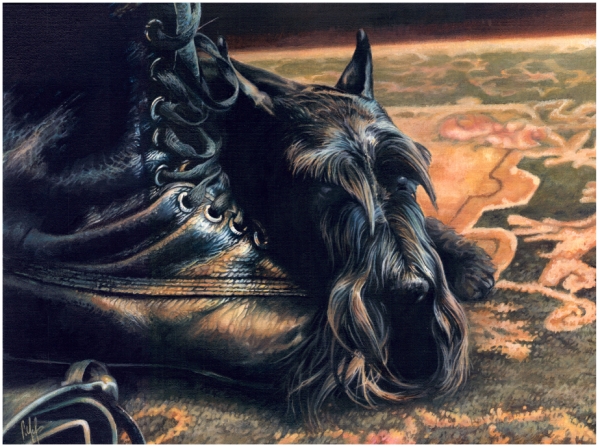
Katewerk Art
Support SDA
Paypal:
Etransfers:
katewerk(at)sasktel.net
Not a registered charity.
I cannot issue tax receipts
Favourites/Resources
Instapundit
The Federalist
Powerline Blog
Babylon Bee
American Thinker
Legal Insurrection
Mark Steyn
American Greatness
Google Newspaper Archive
Pipeline Online
David Thompson
Podcasts
Dark Horse
Michael Malice
Timcast
@Social
@Andy Ngo
@Cernovich
@Jack Posobeic
@IanMilesCheong
@AlinaChan
@YuriDeigin
@GlenGreenwald
@MattTaibbi
Support Our Advertisers

Labour Day

In The Shadow
Of The Winds
Don't Run

Polar Bear Evolution
Email the Author
Wind Rain Temp

Seismic Map

What They Say About SDA
"Smalldeadanimals doesn't speak for the people of Saskatchewan" - Former Sask Premier Lorne Calvert
"I got so much traffic after your post my web host asked me to buy a larger traffic allowance." - Dr.Ross McKitrick
Holy hell, woman. When you send someone traffic, you send someone TRAFFIC.My hosting provider thought I was being DDoSed. - Sean McCormick
"The New York Times link to me yesterday [...] generated one-fifth of the traffic I normally get from a link from Small Dead Animals." - Kathy Shaidle
"You may be a nasty right winger, but you're not nasty all the time!" - Warren Kinsella
"Go back to collecting your welfare livelihood." - Michael E. Zilkowsky

Very moving story. It is just too bad it was not about one of our brave Canadian Flyers who had the same situation.
Goes to show in love and war there are good, honourable people.
Could use more immigrants like Franz Stigler.
Thanks for this inspiring read this morning, Kate.
In North Africa, when the Germans shot down a fighter pilot and he was subsequently killed, they would perform a ceremonial fly by and salute over the English airstrip as a form of respect.
A great true story. Thanks Kate.
Franz Stigler is what is called a man’s man. He not only refuses to be owned by anyone or anything, he’s prepared to surrender all that he has, to make the greatest sacrifice, in order to defend his right to his own life.
A great storey – and really loved the painting too.
“for me, it would have been the same as shooting at a parachute”
Bf 109 pilot Franz Stigler and B-17 pilot Charlie Brown’s first meeting. 6:50
Great story that has been hidden for decades. I first learned of it in the Evergreen Aviation Museum in Oregon a few years back. For those interested the B-17 was called “Ye Olde Pub”, the nose art is not too noticeable in Shaw’s painting.
Mclind,
“The service was a simple one. The Chief of the Air Staff, Air Chief Marshal Sir Stephen Dalton, assured the families of the dead that ‘they will now know that their service and raw courage has been recognised’.
He spoke of the heroism of men such as Canadian pilot, Charles Mynarski VC, who refused to bail out of his burning aircraft until he had saved his tail gunner.”
I believe the story on Canadian Charles Mynarski, VC while not exactly similar might qualify:
http://en.wikipedia.org/wiki/Andrew_Mynarski
Cheers.
An Inspiring story
Rest in Peace, Lt. Franz Stigler.
Reminds me of “The Shepherd”, by Frederick Forsyth, which EBD and everybody here likes very much, and which is played on “As It Happens” every Christmas Eve (recorded by Alan Maitland in the living years).
Yes, brothers fighting each other. Damn foolery brought about by believing propaganda, while the real enemy hides in plain sight. Pretending to be a friend. The ultimate Trojan Horse.
God calls them His great army (Joel 2:25) that fulfills the negative part of His plan. This has been going on for many, many years.
There’s a real simple way to fix it, but people are hard headed. So they suffer, and we get stories such as this. People who know there’s something wrong and won’t be pushed any further. Too bad there aren’t more, in so many other areas of life…ah well, adversity builds character.
Excellent. Thanks for linking that.
He could have been a real bastard about the situation, but chose not to.
This is known as being guided by your inner lights, which speaks to character.
Psalm 15:2-3
2 He who walks blamelessly, and does what is right, and speaks truth from his heart;
3 who does not slander with his tongue, and does no evil to his friend, nor takes up a reproach against his neighbor;
Cheers
Hans Rupprecht, Commander in Chief
1st Saint Nicolaas Army
Army Group “True North”
Sounds like there was not much left to salvage from the plane, but at least part of a trained air crew that would jump into another plane and drop bombs on a German city in the future.
This was an act of liberal cowardice on the part of the German pilot. How would we feel in one of our soldiers gave pity to the enemy, and they then later returned to do their job?
I recall an incident when an associate was urged to commit an unethical/illegal act….with the “who will know?” comment.
His retort…”I”LL KNOW!”
War brings out the best andthe worst in men.
Tain’t right, tain’t wrong. just is……
This was an act of liberal cowardice…
So shooting down the crippled aircraft and crew would have been an act of liberal bravery? Conservative bravery?
I should have said “bleeding heart liberal” cowardice. (oh those poor soldier, I feel sorry for them! but later they come and kill your fellow countrymen)
If the crew of the bomber could be captured, then that would be the more ethical thing to do, but they were still combatants that would later return to the field armed, so they are fair game.
Did any one ever refrain from bombing a target with no anti air or a troop transport with no escort? Same thing
My dad flew bombers with the RAF for the six years of WWII. The RAF was, I understand, a little different from the USAF, wherein 25 missions and you were rotated back to the states. In the RAF one simply kept flying until the war ended, either for you personally, or in totality.
In his limited converations with me about the war, he spoke favourably about the professionalism and actual sense of honour demonstrated by the Luftwaffe. He experienced a few instances, not as dramatic as the one described, whereby airmen on both sides gave their adversaries a break, or even some assistance. Now that is just hois experience, I`m sure there are examples that would contradict that.
But overall, quite a difference from the routine barbarism practiced by the SS and even the German army.
Sounds almost exactly like “Snoopy’s Christmas”:
http://www.youtube.com/watch?v=MbhzqoYYROA
As blogged previously my family has a personal connection with this story. My father in law brought in a B17, the “Sentimental Journey,” into Nanaimo airport (later named Collishaw with much cajoling) in the summer of 1993. This plane was courtesy of the Confederate Air Force, who later brought in a Heinkel.
Hans Stigler was there and presented my father in law with a print of a painting with the Messerschmidt on the foreground of the B17, accompanied by an official account of the encounter. My father in law later gave me a copy of his gift and it now occupies a place of honour in our home.
This story keeps popping up again and again and I think because its a true demonstration of chivalry, seemingly now a lost art. It’s a persistent reminder there is honour in warfare, no matter how base and technical we become.
Instead of opining from our easy chair about brothers fighting each other, maybe we could try to understand why good men and women everywhere are forced to fight tyranny – not just to display jingoistic militarism.
Thanks for the walk, again, down memory lane.
There is the good, the bad and the ugly in every war. On all sides. The winners write the books and make the movies. Usually decades have to pass before the enemy is allowed to be seen as human and we admit to being less than perfect in some of our own endeavors. Hate is essential to winning wars. Sometimes it’s earned and other times it’s contrived. That’s why every country has propaganda ministers with envious budgets in times of severe hardship. One truism is constant. “The first casualty in any war is the truth”. It’s about power, politics, money or religion, and will probably never change. Ah hell, not telling you anything you didn’t know unless you’re under 25. Just musing over that second glass of wine.
Paul Thiessen’s comments may seem a little crass, but these are crass circumstances. He nonetheless has a point. I’ve seen that point from the other side.
One of my old friends had an uncle whom he never knew, who was lost well before my friend was born, flying for the RCAF very late in the war (late April 1944). He was officially missing; he had been flying an escort fighter and was separated from his flight as they returned home, fighting off harassing attacks by what was left of the Luftwaffe, and was never seen or found again.
One evening late in the 80’s. my friend was sitting at home after dinner when the phone rang. When he answered, the caller was a stranger who asked for him by name, and then asked if he was related to this lost uncle whom he also named. My friend wanted to know who was calling. The fellow said, “I hardly know how to introduce myself. I’m the man who killed your uncle.”
He had spent most of the war flying on the Eastern Front, but in March 1944 had been brought back to the fatherland to fly air defense in the west. He’d been out on another operation and was on his way back to base when he’d looked down though a break in the clouds to see an allied fighter heading the other way some ways below him. At the time he thought only business: checked his fuel and ammo, and once certain he could do it, swooped down, caught the enemy by surprise and blew him away.
And once he was back at base he began to think. He realized that this guy had been heading home; had probably not had the fuel or ammunition to come after him if he’d spotted him, and almost certainly hadn’t spotted him. It began to sink in that he could have let the guy live, but he hadn’t. He had killed quite a lot of enemy fliers, but always in combat, always knowing that it was kill or be killed. This was different, and it bothered him. It bothered him even more when the war then ended almost at once.
Some years after the war he emigrated to Canada, and enjoyed a long and successful career as a commercial airline pilot. He could never forget that pilot he killed, and since he’d noted the Canadian markings, he began researching air force records to see if he could find out who it was. Eventually he found one record of a plane gone missing on the right day and in the right place, and figured it must be the same guy. And it began to bother him that this was recorded as missing, with nobody else knowing what had become of him. So he started more research to track down this guy’s family. And he found what looked like the right family, with a nephew living only a couple of miles away in Mississauga. So, since it was a local call, he picked up the phone and called my friend.
As he said, “I don’t mean to cause you trouble or stir your grief. But his family needs to know how died and that he died honourably, and only I can tell you that. He didn’t die because he was stupid or incompetent or cowardly or foolish; nothing like that. He died only because I killed him when I didn’t have to. I alone am responsible, and I always will be.”
So, that’s what the other side of the coin of duty looks like. It can be a hard coin to have to handle.