Category: Reader Tips

Reader Tips

Good evening ladies and gentlemen, welcome to SDA Late Nite Radio. Tonight, for your delectation and pursuant to our Sunday night classical music show, here are the Vienna Philharmonic Orchestra performing one you all know, the first movement of Wolfgang Amadeus Mozart‘s Symphony No.40, K.550, Count Nikolaus de la Fontaine und d’Harnoncourt-Unverzagt conducting, at the Suntory Hall in Tokyo (2006, 8:16).

Your Reader Tips are, as always, welcome in the comments.

Reader Tips

Good evening ladies and gentlemen, welcome to SDA Late Nite Radio. Tonight, for your delectation and pursuant to our Saturday night distinguished lecture, documentary & interview series, here is Daniel Dennett, Austin Fletcher Professor of Philosophy and co-director of the Center for Cognitive Studies at Tufts University, presenting his talk: Can We Know Our Own Minds? (23:45).

Last week, Jeff Hawkins stood on the shoulders of our previous physics and genetics shows and started taking a look at our neo-cortex and how the modern human brain works. Now hold on to your seats: in tonight’s talk, Dan notes that not only don’t we understand our own consciousness, but that half the time our brains are actively fooling us. As Dan says: “Your consciousness is not quite as marvelous as you may have thought it is […] consciousness is a bag of tricks”. Of course, tonight’s show wouldn’t be complete if I didn’t at least slightly disagree with Dan, in the sense that I think said bag of tricks is, indeed, marvelous.

Your Reader Tricks, er, Tips, are, as always, welcome in the comments.

(note from Kate – for some reason, Vit’s post didn’t auto-publish last night as scheduled. I’m republishing it now, for your morning enjoymen.)

Reader Tips

Good evening ladies and gentlemen, welcome to SDA Late Nite Radio. Tonight, for your delectation, we have a very special show for you. Pursuant to our Friday night old-time radio crime detective show, to St. Valentine’s Day, 2009, and to eighty years ago today, here is the delightful Mr. Dickie Goodman performing:

♥ The Touchables ♥

The Touchables, running 2:04, was originally released by Goodman on February 26, 1961, on Rori Music’s Mark-X Records, pressing 8009. The B side of the 45-rpm single contains Goodman’s Martian Melodies, which is a 33 1/3-rpm version of the same recording as the normal speed version of Martian Melody that was issued as Luniverse 105 on July 13, 1957. The copy of this disk that I have here in the studios lists Glazer and Aricin along with Goodman, but I have as yet not been able to find reference to either them in the Interwebothique.

Your Reader Tips are, as always, welcome in the comments.

Reader Tips

Good evening ladies and gentlemen, welcome to SDA Late Nite Radio. Tonight, for your delectation and pursuant to our Thursday night wild-card show, here is Barnhart‘s Reactor Lift video, featuring their LTM-1400 hydraulic short-luffing Jib Crane, their 500-ton Modular Lift Tower, and a 96-wheel Goldhofer Modular Platform Trailer, filmed in the operating NHDS unit in the Premcor refinery in Memphsis (2003, 6:53). (You may also wish to note that later today, at 2009-02-13 17:31:30 Central Standard Time, UNIX time will be 1,234,567,890.)

Your Reader Tips are, as always, welcome in the comments.

Reader Tips

Good evening, EBD here. Welcome to the Wednesday edition of Late Nite Radio.
Tonight’s musical selection is from Australian Nick Cave’s album No More Shall We Part. At first glance it might seem a political song, or some sort of ironic commentary on the so-called religious right, but it’s not; the real subject of the song is a particular feeling, a desire for communion, which the idiosyncratic Cave has artfully made one with the song itself. Time-bound identity-politic struggles are noted, but then duly rejected — spat out — as anathema to the prayed-for state of grace, while idealized, nostalgic, almost pastoral politics are summoned in the present tense, as a prayer, against all odds; in both cases it’s the feeling — the desire for a state of grace — ordering the words around. Politics in reverse, really.
Here, for your entertainment, Nick Cave sings God Is In The House.
The thread is open for your Reader Tips.

Reader Tips

Good evening ladies and gentlemen, welcome to SDA Late Nite Radio. Tonight, for your delectation and pursuant to our Tuesday night vintage show, and courtesy of the Cylinder Preservation and Digitization Project of the Department of Special Collections in the Donald C. Davidson Library at the University of California in Santa Barbara, here is Fred Duprez performing Happy tho’ Married on Edison Blue Amberol cylinder #2373 (1914, 4:21, 4 MB, MP3).

Your Reader Tips are, as always, welcome in the comments.

Reader Tips

Good evening ladies and gentlemen, welcome to SDA Late Nite Radio. Tonight, for your delectation and pursuant to our Monday night jazz show, here are Gerry Mulligan, Bob Brookmeyer, Wyatt Ruther, and Gus Johnson performing Open Country (5:23). Brookmeyer’s performance is a delightful addition to tonight’s show; we haven’t seen enough of the valve trombone lately (not that we’ve seen enough of the Cimbasso either, yet perhaps we should save that for another show).

Your Reader Tips are, as always, welcome in the comments.

Reader Tips

Good evening ladies and gentlemen, welcome to SDA Late Nite Radio. Tonight, for your delectation and pursuant to our Sunday night classical music show, here are Yo-Yo Ma, Emanuel Ax, and Pamela Frank performing the third movement of Frédéric Chopin‘s Trio in G Minor for violin, cello, and piano, Op. 8 (5:39).

We also have an extra treat tonight, a wee bit of classical music comedy. Here is the only known footage from the playing of the world’s only pipe organ with an open 128 foot pipe, which would be a fundamental frequency of 4 Hertz, for those of you keeping score at home (1:29 😉

Your Reader Tips are, as always, welcome in the comments.

Reader Tips

Good evening ladies and gentlemen, welcome to SDA Late Nite Radio. Tonight, for your delectation and pursuant to our Saturday night distinguished lecture, documentary & interview series, here is Jeff Hawkins, founder of the Redwood Center for Theoretical Neuroscience, presenting his talk: Brain Science is about to Fundamentally Change (2003, 22:10).

I think it can be reasonably argued that our DLDI series has, at least so far, some dependence on the processing engine involved thereto, even though I don’t think that effects the fundamental undergirding; yet so it is that if we are to look at knowledge, then we must consider our implementation of knowledge. Epistemology, like metaphysics, doesn’t depend, in my opinion, on the human engine, but we do.

In this video Jeff takes a look at some of the ways in which our understanding of our processing engine is changing, most notably that intelligence might not be principally about logic and reason per se, rather, it might be more about memory and the predictive accuracy of our pattern matching skills (of which logic and reason are two particularly effective examples).

Your Reader Tips are, as always, welcome in the comments.

Reader Tips


Good evening ladies and gentlemen, welcome to SDA Late Nite Radio. Tonight, for your delectation and pursuant to our Friday night old-time television show, here is the Mr. Bedloe Strikes Again, II, III, episode of Petticoat Junction (“It is run by Kate, come and be her guest, at the Junction“, 1963, 28 minutes). By the way, I show up at 3:20 in part III; yup, that’s me: Sam Drucker  ;-)

Your Reader Tips are, as always, welcome in the comments.

Reader Tips


Good evening ladies and gentlemen, welcome to SDA Late Nite Radio. Tonight, for your delectation and pursuant to our Thursday night wild-card show, here are Pink Floyd performing, from their album Meddle (the third LP, it turns out, that I ever purchased), a tune now finally available via the Interwebothique, and one of the most interesting songs ever: Echoes ~ I, II, & III (1971, 23:31). Echoes, along with Iron Butterfly‘s In A Gadda Da Vida, were among the first psychedelic rock works to occupy an entire side of a modern LP; they are, indeed, seminal works in the history of modern rock, psychedelia, and electronica.

Update: wait, wait, there’s more. I see where (pursuant to research undertaken in relation to the comments) the original 1967 BBC footage of Pink Floyd’s Astronomy Domine is now available again via the Interwebothique, and I must say, it is quite something.

Your Reader Tips are, as always, welcome in the comments.

Continue reading →

Reader Tips

Good evening, EBD here. Welcome to the Wednesday edition of SDA Late Nite Radio.
During the 1972 Munich Olympics a group of terrorists from Lebanon, Syria and Jordan entered the Athlete’s Village under cover of darkness; less than twenty-four hours later, 11 Israeli athletes were dead. I bring this up for a reason: I’m guessing that a lot of SDA commenters of a certain age remember how our schoolmates, teachers, friends, neighbours, and our journalists, were uniformly heartsick and appalled at the unjustifiable and inhuman brutality.
A lot has changed in the intervening 37 years. If a similar incident were to occur now, legions of people, including journalists, would launch into a discussion on the matter of Israel and in so doing obviate, almost incidentally, the matter of the volitional and moral agency of those who murdered the innocent athletes. This approach, which endlessly rationalizes inhuman brutality, typically flies under the banner of enlightenment and compassion. As Daniel Pearl’s father Judea wrote in the WSJ:

“Somehow barbarism, often cloaked in the language or ‘resistance,’ has gained acceptance in the most elite circles of our society. The words ‘war on terror’ cannot be uttered today without fear of offense. Civilized society, so it seems, is so numbed by violence that it has lost its gift to be disgusted by evil. I believe it all started with well-meaning analysts, who in their zeal to find creative solutions to terror decided that terror is not a real enemy, but a tactic.” (emph. mine)

Tonight’s musical selection, written by Noel Coward, and banned by the BBC, is a dark satire on the rationalizations of the British anti-war movement. WWII was still raging at the time the song was released in 1943 but, since the Battle of Britain had ended, Cowards’ naive, earnest character was moved to declare with disarming blitheness and no small measure of self-congratulation that “the war is over,” and to advocate for forgiveness and warm relations with their newfound would-be friends.
Coward could not possibly have known the extent to which the voices he satirically appropriated would later become mainstream, or that his topical, contemporary song was a harbinger of things to come.
Here it is, then: Noel Coward singing Don’t Let’s Be Beastly To the Germans.
The thread is open for your Reader Tips.

Reader Tips

Good evening ladies and gentlemen, welcome to SDA Late Nite Radio. Tonight, for your delectation and pursuant to our Sunday night classical music show, here are Itzhak Perlman and the Israel Philharmonic Orchestra performing Pyotr Ilyich Tchaikovsky‘s Violin Concerto in D, Opus 35, Zubin Mehta conducting, in Russia (10:21). This video, through its end, is beautiful on many levels.

Your Reader Tips are, as always, welcome in the comments.

Reader Tips


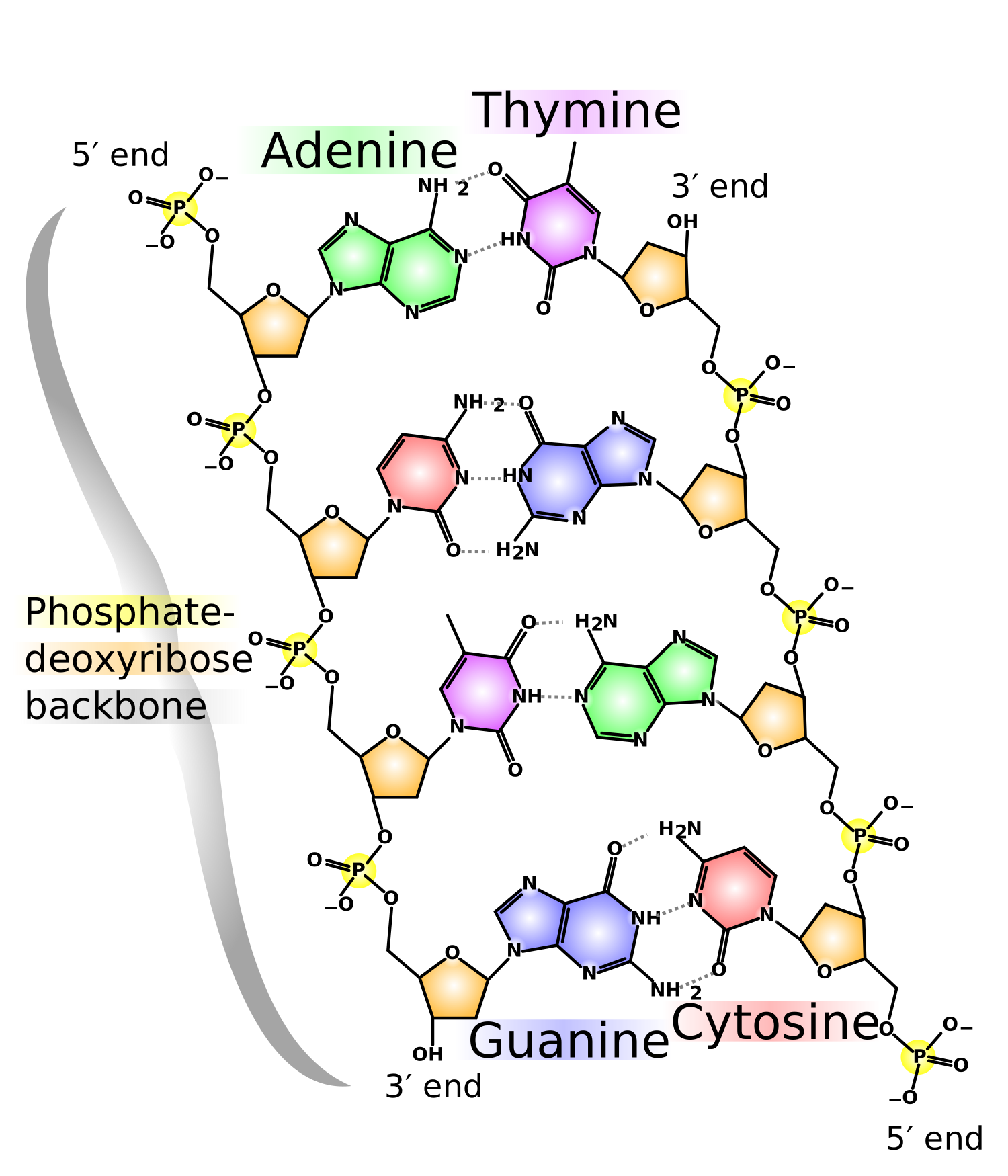
Good evening ladies and gentlemen, welcome to SDA Late Nite Radio. Tonight, for your delectation and pursuant to our Saturday night distinguished lecture, documentary & interview series, here is James Watson, co-discoverer of the structure of DNA, presenting his talk: The Double Helix and Today’s DNA Mysteries (2005, 20:55).

In last week’s show David Deutsch took us from the metaphysics and physics of our previous shows toward chemistry, biology, cognitive human beings, and epistemology. In tonight’s talk, James revisits some of the chemistry of the matter, and he recalls his personal involvement with one of the three most important ideas of the twentieth century (which were: Quantum Physics, Computation, and DNA). I particularly like the first paragraph from Watson and Crick’s Molecular Structure of Nucleic Acid (Nature, 1953):

“We wish to suggest a structure for the salt of deoxyribose nucleic acid (D.N.A.). This structure has novel features which are of considerable biological interest.”

Lastly, James goes on to take a look at how all that effects how different people relate to reality in different ways. People need to understand that it’s not just what we think differently, that is to say: what we disagree on; it’s also how we think differently, such as spatio- temporally, logico- mathematically, musico- kinesthetically, socio- linguistically, &c. You can come up with a good set of these sorts of differences: it is interesting to compare and contrast them with personality types. And the neat thing is that it doesn’t matter why humans are this way, that is to say: whether God made it so or it just is so; what matters about it per se is that it is so.

Your Reader Tips are, as always, welcome in the comments.

Reader Tips

Good evening ladies and gentlemen, welcome to SDA Late Nite Radio. Tonight, for your delectation and pursuant to our Thursday night wild-card show, here is astronaut Michael Fincke presenting his International Space Station Tour, II, III, IV (2009, ½ hour).

On another topic, those of you in the process engineering field will undoubtedly be familiar with the broad range of block valves that are commonly available for use in our projects. Nevertheless, a colleague today sent me this image of a rather unusual block valve, which I thought you might find interesting.

Your Reader Tips are, as always, welcome in the comments.

Navigation